

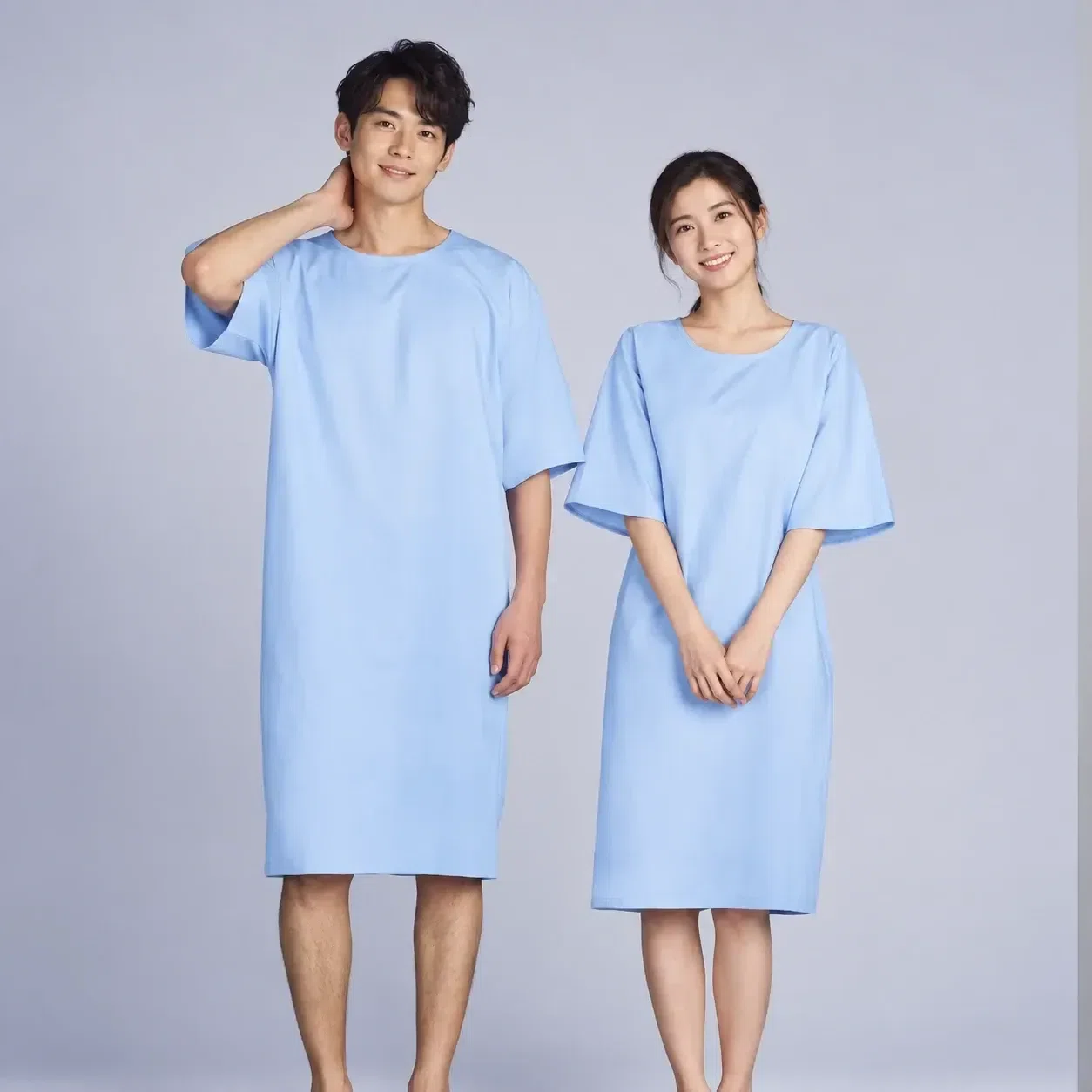

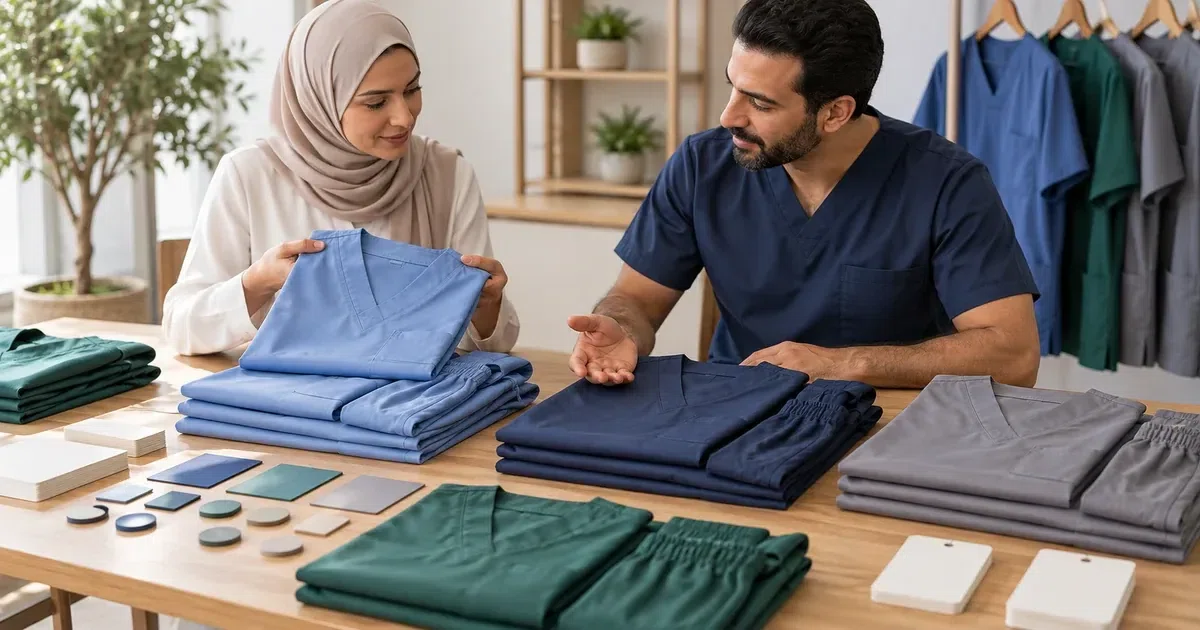






Start with the garment's working and care routine
A healthcare uniform needs to suit both the wearer and the process used to care for it. Before selecting scrubs or coats for a team in Oman, identify where each garment will be worn, who manages laundering and which facility policy guides the decision. Give the supplier those requirements as part of the clothing brief.
Oman's Ministry of Health publishes Laundry Services Guidelines within its approved healthcare documents. Ask the facility's laundry or infection-control lead which current guidance and local procedures apply to this order. The purpose is to define the buyer's care requirements accurately. A reference to a Ministry document does not establish product certification or prove that a garment will withstand a particular treatment.
Describe clinical tasks before selecting the cut
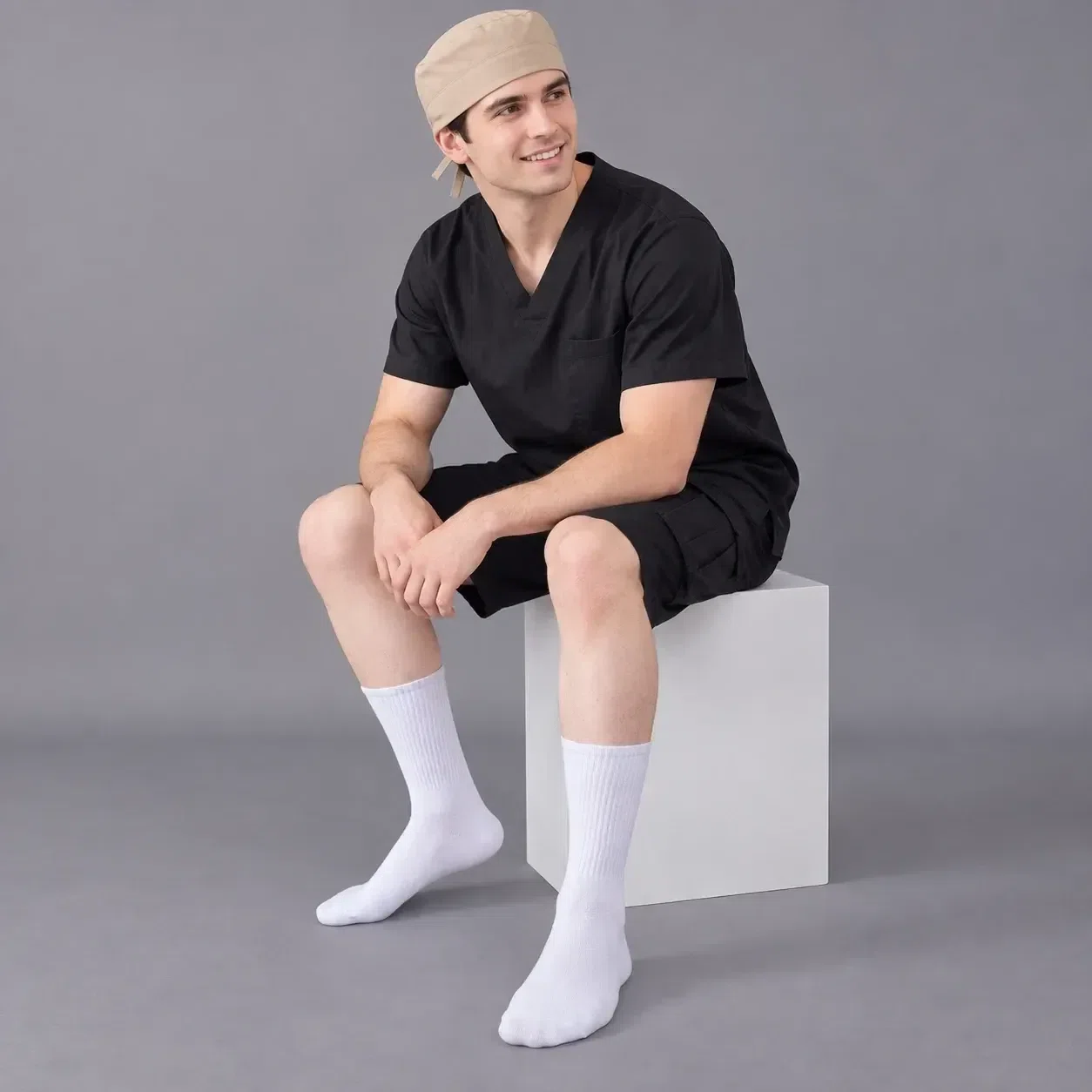
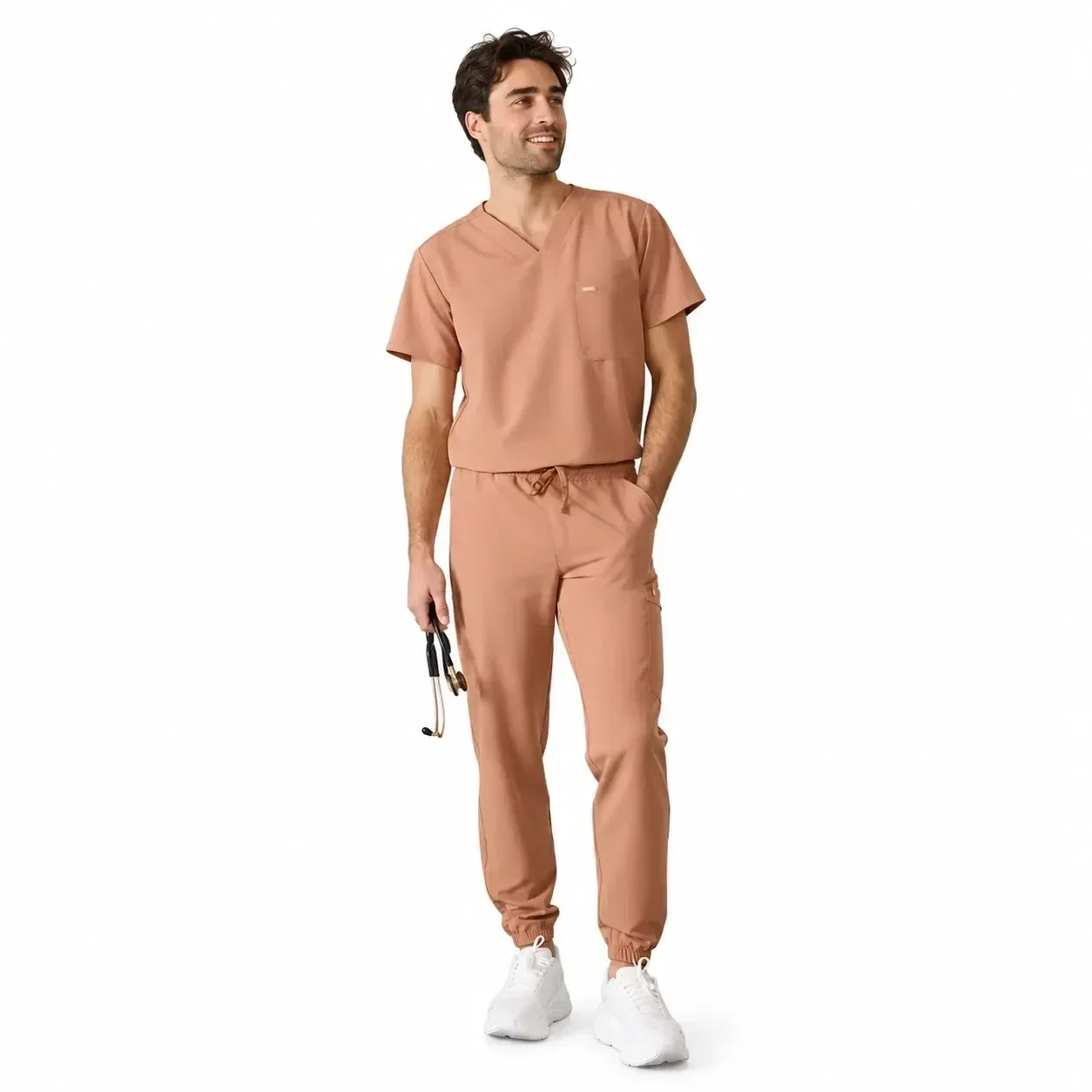
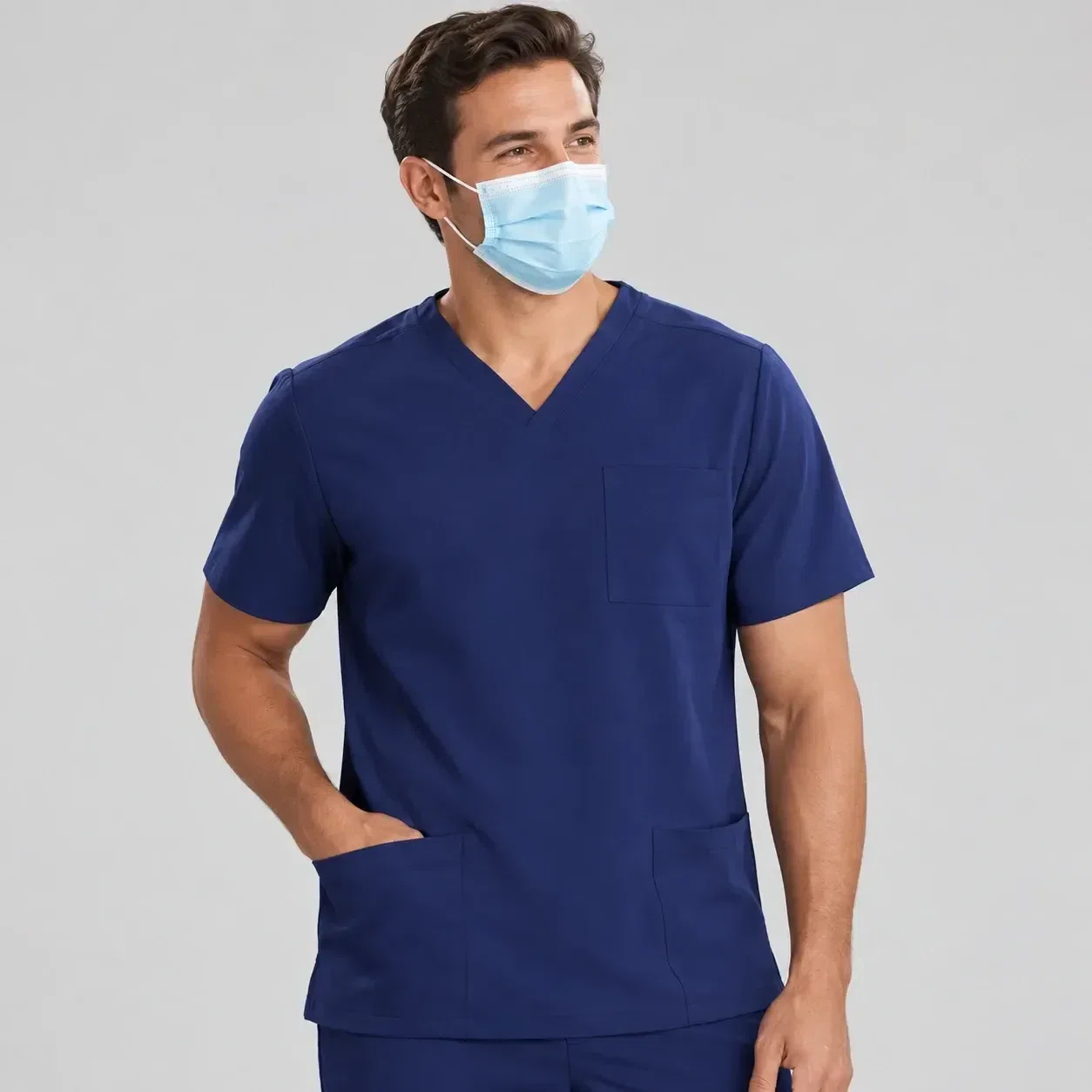
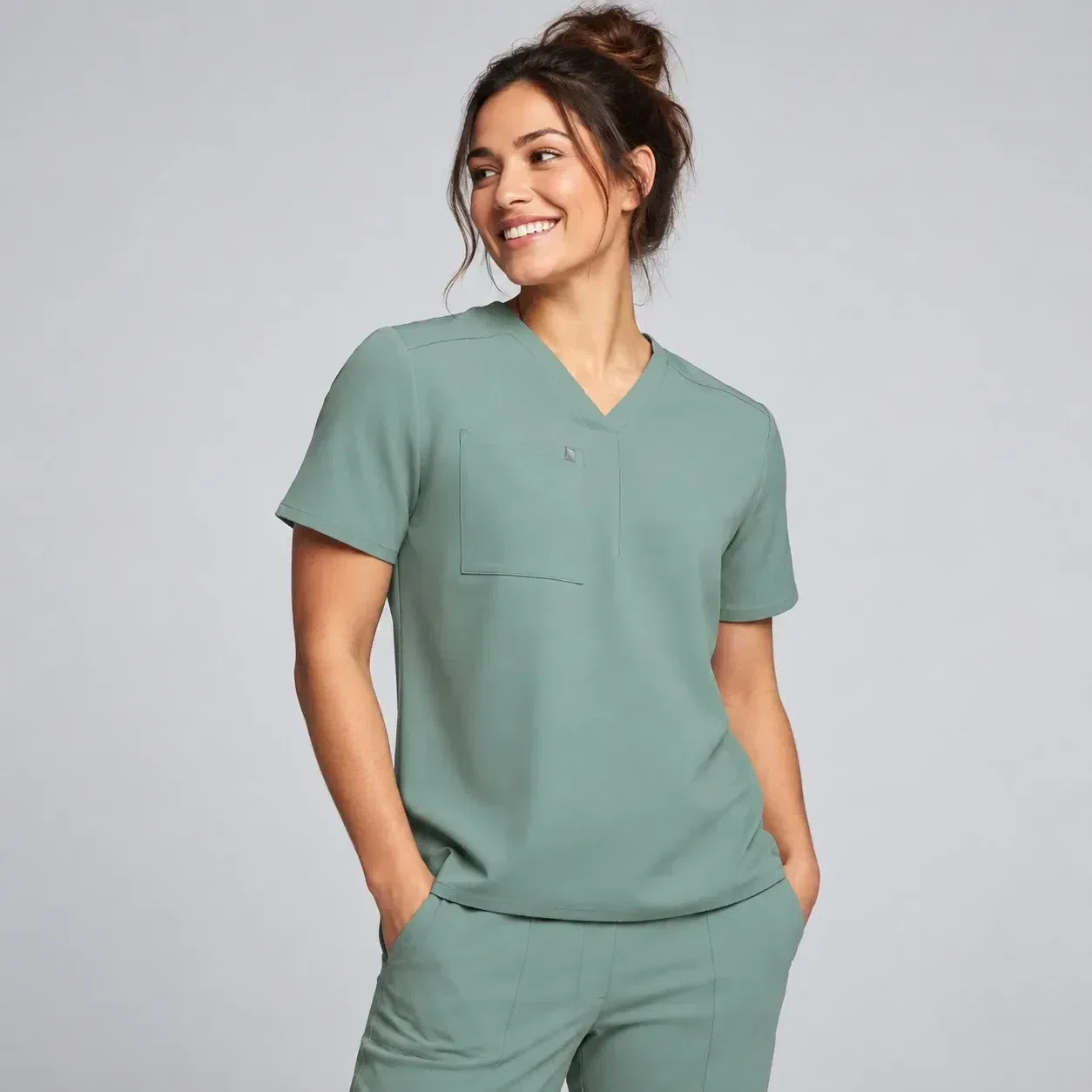
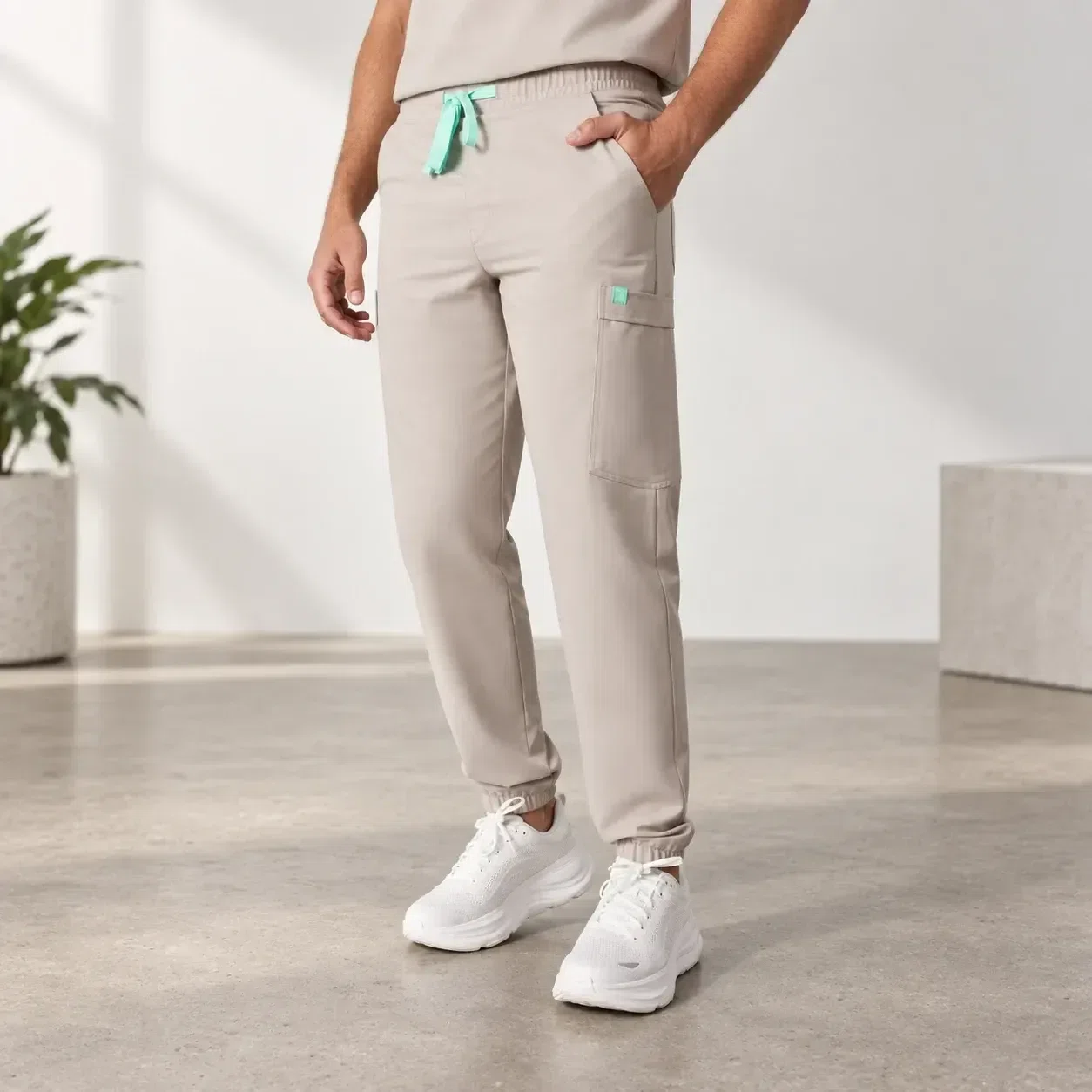
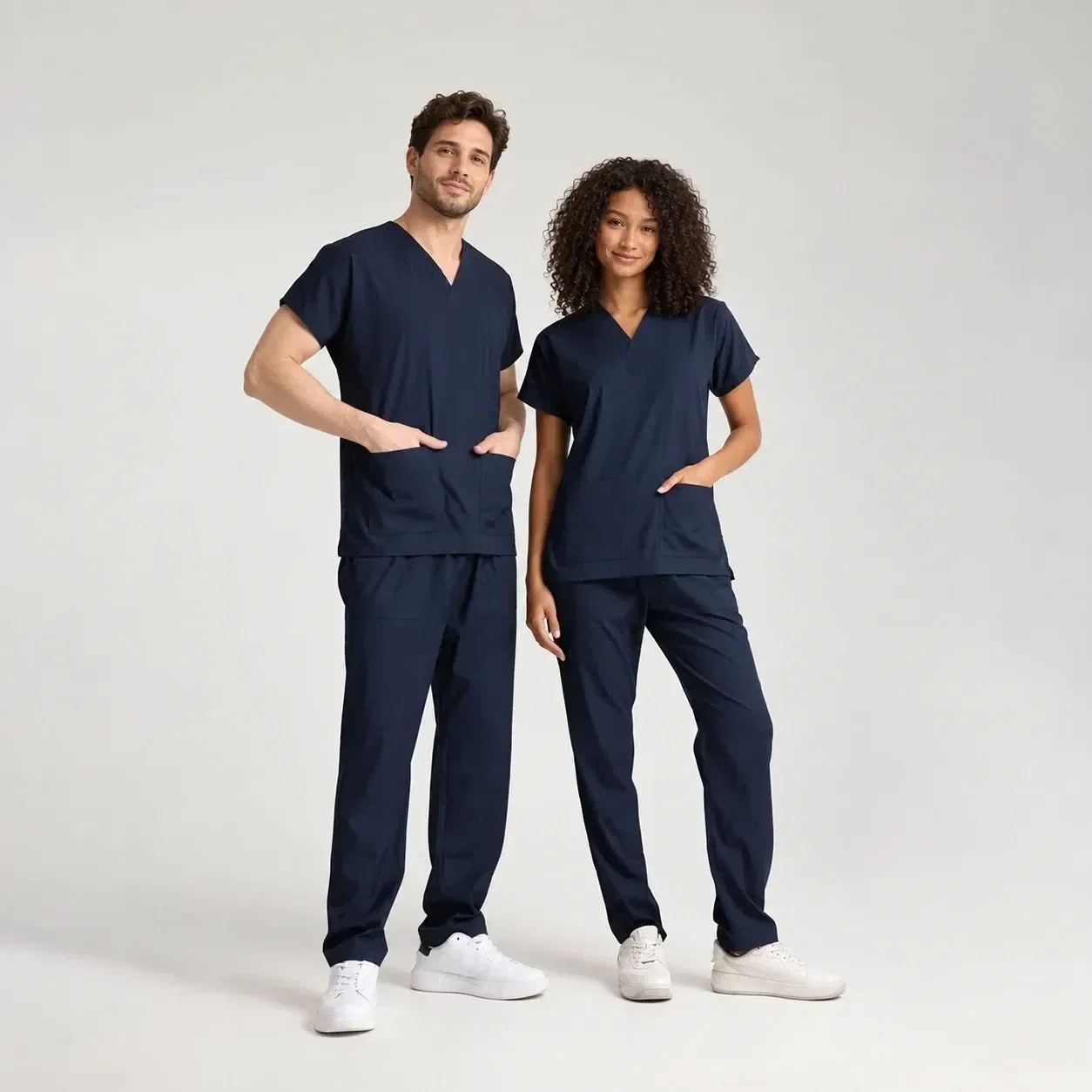
Consider custom medical scrubs for roles where the facility approves a coordinated scrub outfit. Describe the staff's normal movements and the items they need to carry. Top length, pocket access and trouser fit should support those tasks, and the size schedule should distinguish upper and lower garments when necessary.
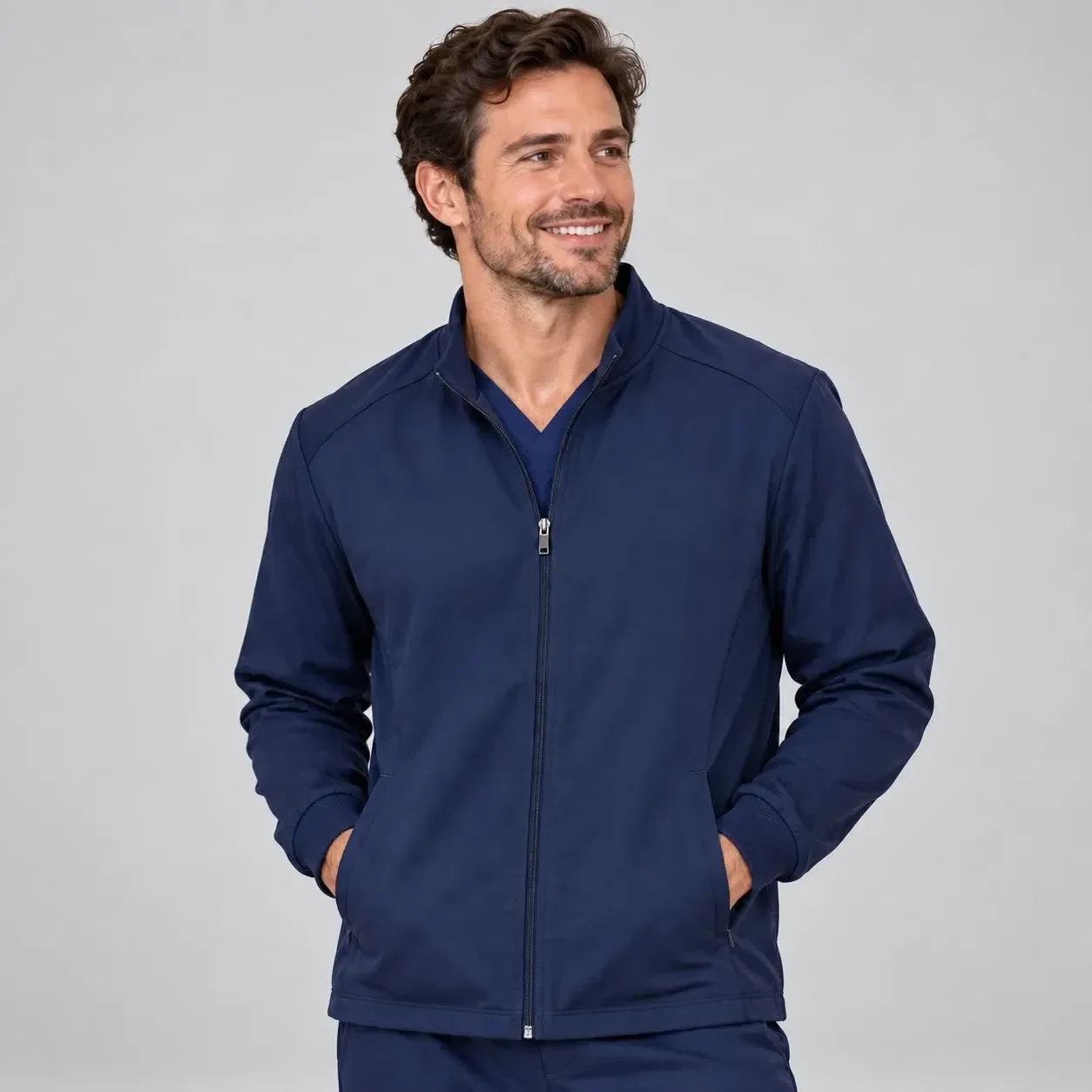
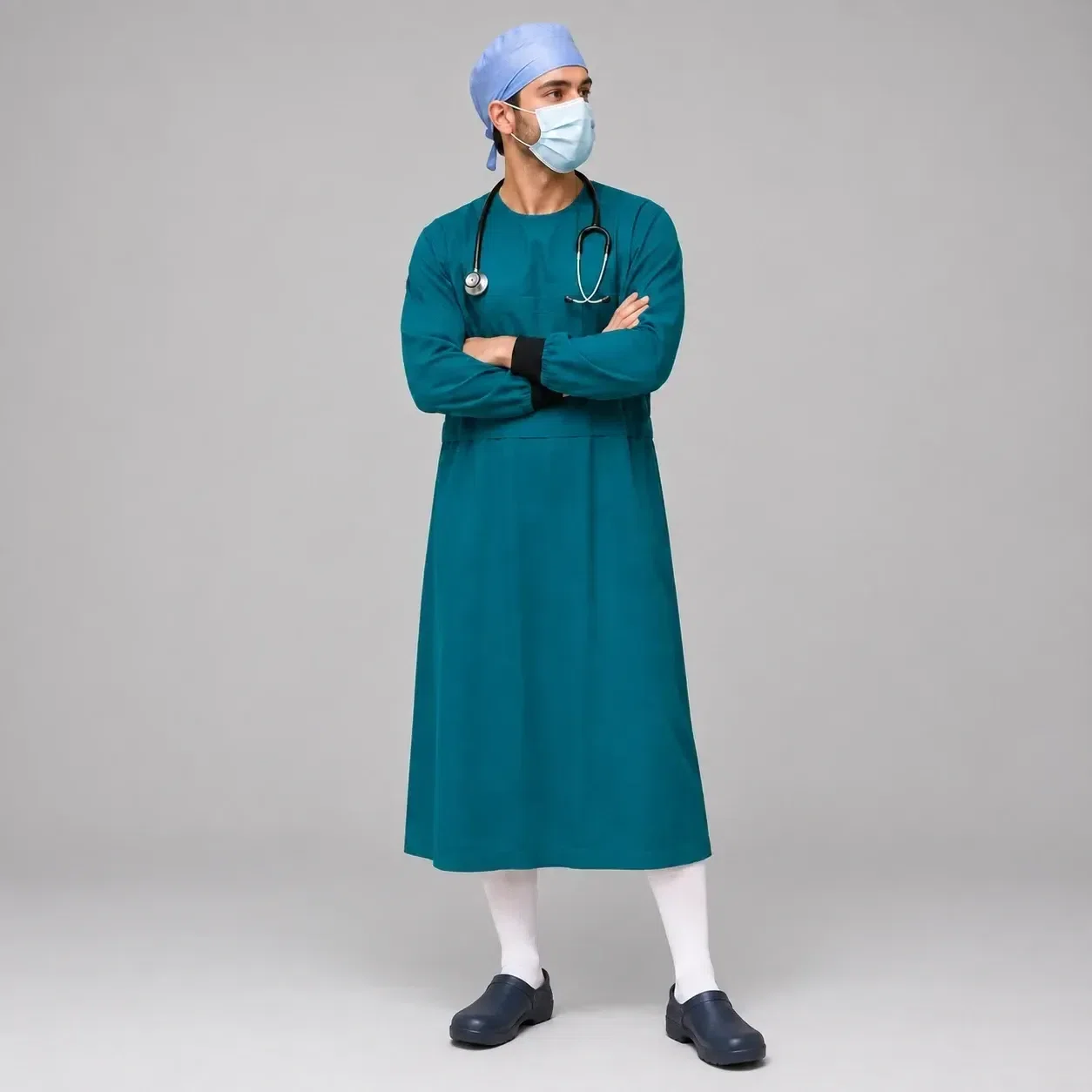
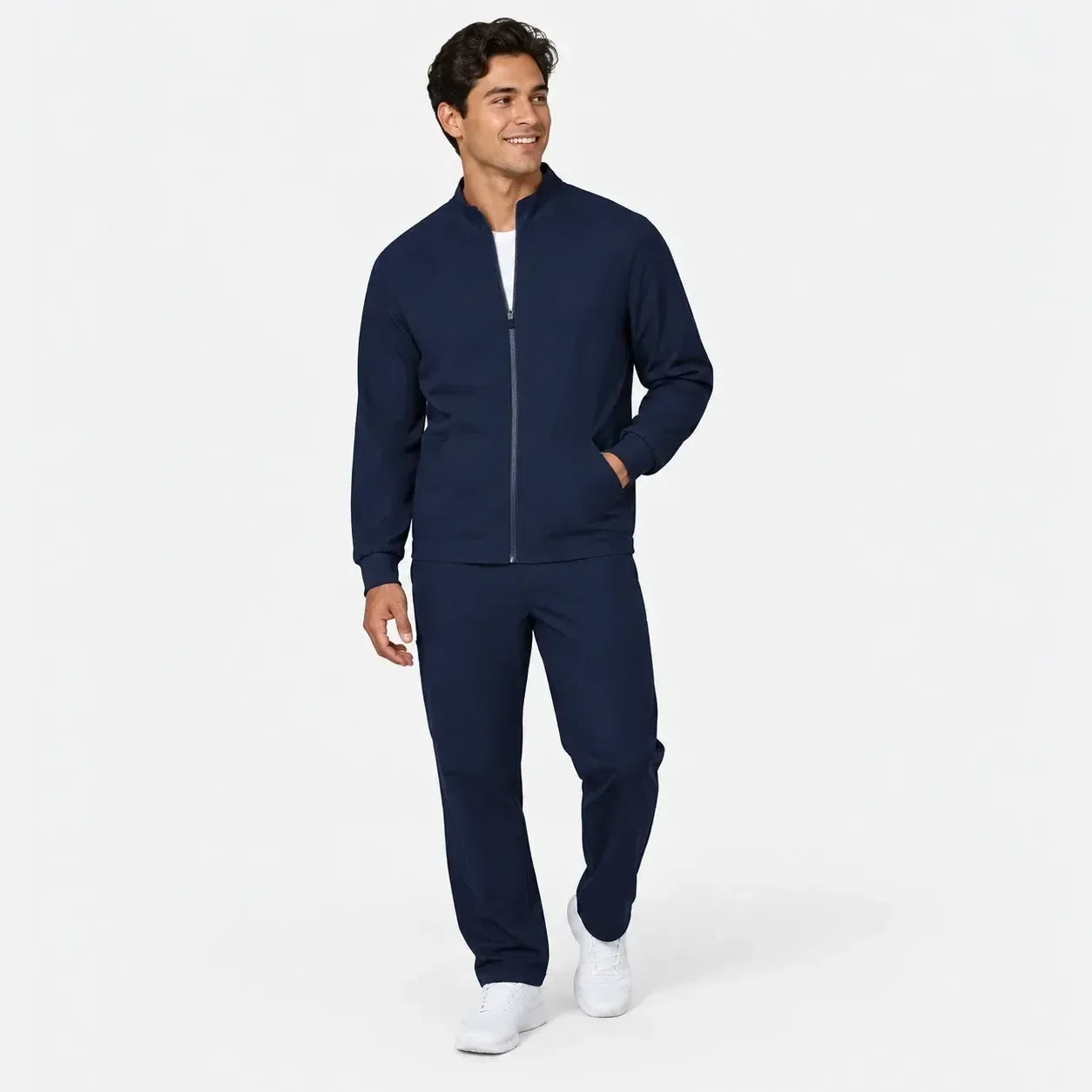
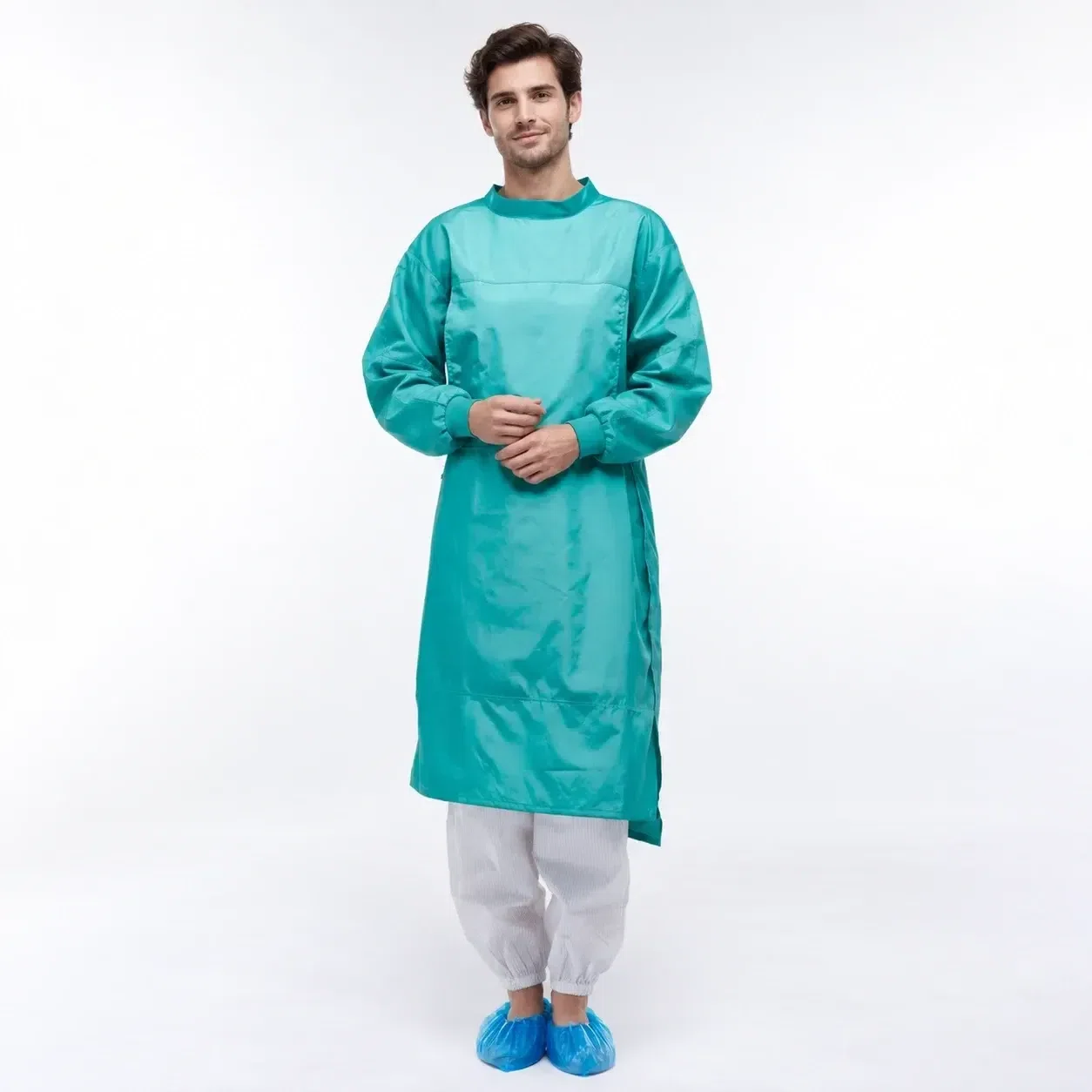
For custom lab coats, explain the intended activity and desired length, closure and sleeve arrangement. A coat's appearance is only one part of the decision. The facility reviewer must assess suitability for the work and identify any additional protective equipment. Do not infer medical protection from a white colour, a healthcare product name or a logo.
Work indoors and movement between spaces may matter more to the actual garment choice than a broad description of Oman's climate. Explain the working conditions rather than assuming a lightweight fabric is always appropriate. Any requested construction change should be confirmed for the product offered.
Turn laundry requirements into a review checklist
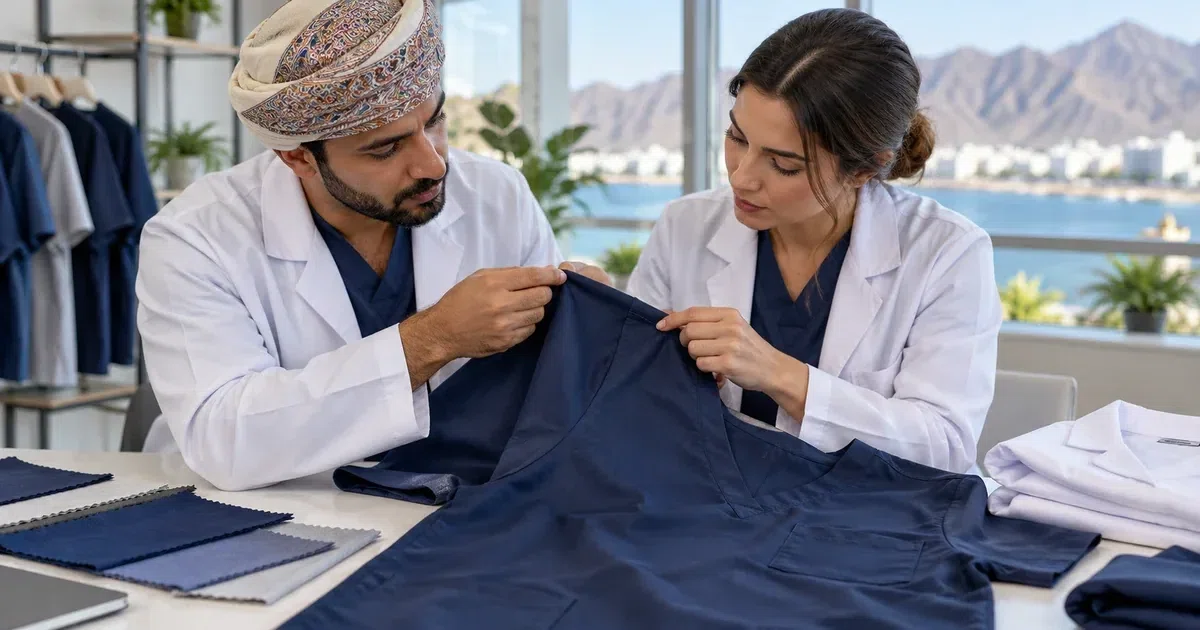
Ask for the proposed fabric composition and care instructions, then pass them to the person responsible for the facility's garment care. If the buyer uses a particular washing or drying process, describe it for assessment before choosing materials and decoration. State the required evidence or sample checks in the enquiry rather than assuming that a generic easy-care description settles the issue.
When a physical sample is required, agree the purpose and evaluation method first. A buyer might assess fit, colour appearance after its routine care or the condition of a decorated area. The appropriate reviewer should define any test procedure and acceptance criteria. Sample availability, costs and timing must be confirmed; this page does not offer unverified testing or a sample guarantee.
Keep the results against the actual garment reference. A different fabric, colour or decoration can change what needs to be reviewed. If a proposed specification changes after assessment, return it to the relevant approver rather than assuming the earlier decision covers every alternative.
Plan quantities around issue and replacement
List garments by role, size and approved colour. Record whether staff require separate top and trouser sizes, and use a consistent measurement guide. Check the wearing positions that matter, including reaching, bending and sitting. Requests for longer garments or different coverage should include measurements and be confirmed as part of the offered design.
The buyer should decide its issue quantities from staffing and its own clothing-care routine. Include any replacement allocation as a separate line so the order totals are easy to review. Do not use an invented universal number of uniforms per person. When new staff join, identify the existing approved specification and request the sizes needed against that reference.
Review branding and supply details together
StitchBase provides free mockups before production. Use the design review to check colour references, decoration position and staff wording. Share final artwork and ask which decoration method fits the proposed garment. Where Arabic wording is requested, production must confirm the script and application before approval; the current facts do not establish Arabic embroidery capability.
Keep a physical care assessment separate from the mockup approval. The mockup shows the planned appearance, while the buyer's sample review concerns the actual garment. Record both against the accepted artwork and fabric reference so a future enquiry can identify the same requirements.
Send the complete brief with the Oman destination, intended consignee, requested date and any document requirements. Ask the team to confirm current service availability, the offered shipping arrangement and duty or tax responsibility. Include the garment care requirements, quantities and sample requests when seeking a quotation so the proposal can address the decisions that matter to your facility.