
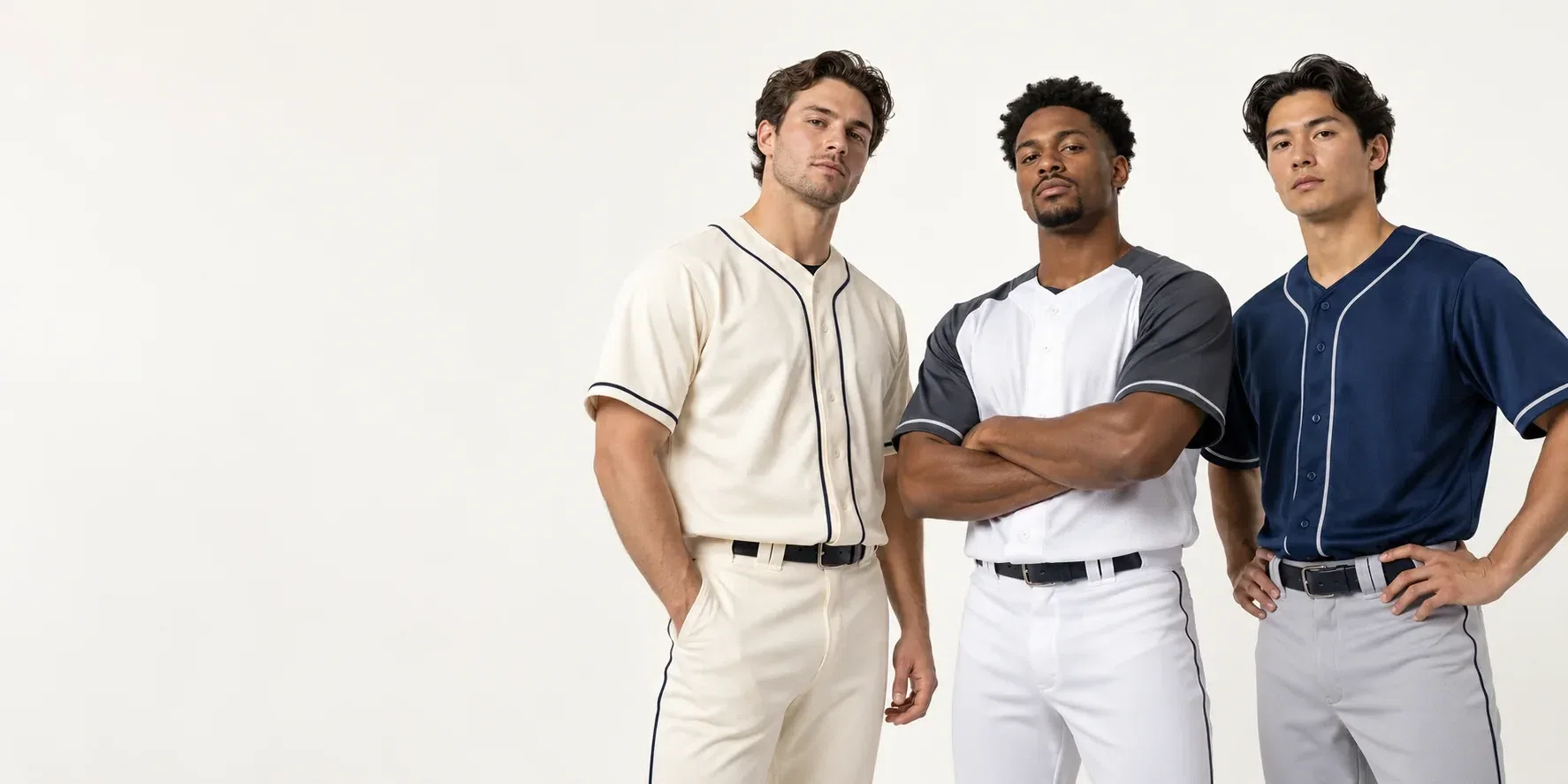
For baseball teams, sublimation is often worth shortlisting for detailed polyester jerseys with integrated colours, player names and numbers. Screen printing can be a practical choice for repeated team logos on suitable ready-made garments. The better option depends on the fabric, artwork, roster and complete order cost.
Before choosing a method, decide what you need from the finished uniform. A bold team name on practice shirts is a different job from a coordinated home-and-away jersey programme. This guide explains the trade-offs and the checks that help prevent ordering mistakes.
Team buyers planning a wider sportswear programme can use the same sample, roster and reorder checks across related garments.
Sublimation vs screen printing: the main differences
Conventional dye sublimation uses heat to transfer dye into compatible polyester fibres. Screen printing pushes ink through a stencil onto the garment, using separate screens for different ink layers. These processes create different opportunities for design, fabric selection and personalisation.
| Team requirement | Sublimation | Screen printing |
|---|---|---|
| Complex artwork | A useful candidate for gradients and coordinated panel designs. | Possible with suitable separations; added layers can increase preparation. |
| Simple repeated logo | Can reproduce it, but compare the complete jersey cost. | Often worth quoting when many garments share the same design. |
| Fabric selection | Conventional direct fabric applications favour polyester-compatible materials. | Suitable ink systems can work on several fabric types. |
| Print feel | Direct dye sublimation does not add a separate ink film. | Feel varies with ink, coverage and production technique. |
| Player details | Names and numbers can be incorporated into individual artwork. | Changing details require a separate production plan. |
| Small reorders | Confirm minimum quantities, artwork retention and matching. | Confirm repeat setup and personalisation charges. |
Use these points to compare proposals, then approve a sample made with the intended fabric and process.
How sublimation works on baseball jerseys
In a typical transfer workflow, artwork is printed onto transfer paper and applied to a compatible substrate with heat. Sawgrass describes the dye-sublimation process as dye bonding into polyester fibres or a polymer coating.
For baseball jerseys, this makes sublimation a useful option when several design elements need to share one layout. Team colours, stripes, sponsor marks and player details can be planned together rather than added as separate surface decorations.
However, all-over printing needs the right production workflow. Printing separate fabric panels before sewing differs from pressing a finished jersey. Ask how the supplier handles sleeves, side panels, seams and the button placket. Do not assume a finished-garment print reaches every area evenly.
Conventional dye sublimation usually starts with white or light-coloured polyester-compatible fabric. Epson's sublimation guidance explains that standard dye sublimation does not use white ink. A dark jersey design can therefore be produced by printing dark areas onto a light base; it does not require starting with a dark blank.
Specialist treatments and alternative transfer systems exist, so “sublimation works only on polyester” is too broad. For a team order, identify the exact process and evaluate its sample rather than treating every product called sublimation as equivalent.
When screen printing is worth considering
Screen printing can suit a shared team name, crest or sponsor logo on a suitable garment. It is particularly worth comparing when most items use the same artwork and only a few placements are needed.
Illustrative product styling
Explore custom baseball uniforms
Compare garment styles and plan artwork, colours and player details against an approved sample.
View baseball uniforms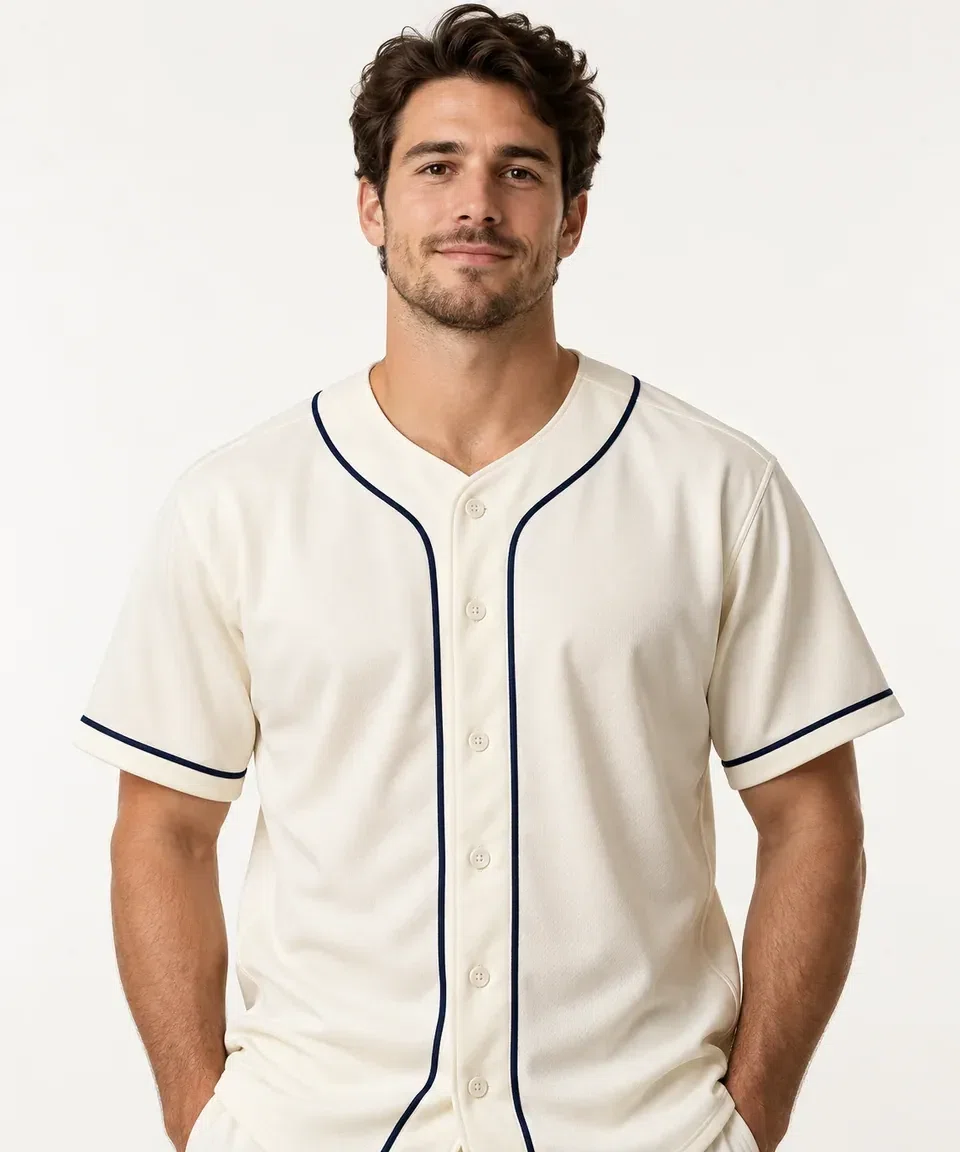
Each ink layer requires preparation and alignment. More colours, an underbase or extra placements can increase production work. Gradients and detailed images are possible with appropriate techniques, but should be quoted from the actual artwork.
Screen printing is not restricted to cotton. Polyester baseball jerseys can also be printed with a suitable ink system and process. Avient's polyester printing guidance recommends pretesting and explains how ink selection and curing affect dye migration, where garment dye discolours the print.
A screen print also does not automatically feel heavy. Ink choice, deposited thickness and coverage influence the finish. Ask to handle a representative sample, especially when the design covers a large area.
Compare comfort and durability on the actual garment
Direct dye sublimation avoids a separate surface ink film that could crack or peel. That is a useful advantage for integrated jersey graphics. It does not establish that the colours will never fade or that the garment will outlast every screen-printed alternative.
Fabric abrasion, sunlight, laundering and production quality still matter. Epson advises following the textile manufacturer's washing instructions and cautions against long-term outdoor applications in its general sublimation guidance. Avoid accepting an unlimited wash-life promise without relevant evidence.
Screen-print performance depends on compatible materials, curing and use. A properly produced print can serve a team well; an unsuitable ink or production process can create problems regardless of the artwork.
Likewise, sublimation does not make a dense jersey lightweight, breathable or moisture-wicking. Assess the fabric weight, construction, fit and ventilation separately. Compare samples during throwing, bending and batting movements, then inspect them after the agreed laundering process.
Plan player names, numbers and jersey layout
Personalisation is a major difference between a team order and a batch of identical shirts. Sublimation artwork can vary by player, but roster preparation, proofing and production still have costs.
For screen-printed uniforms, ask exactly how individual names and numbers will be applied. The supplier may propose screen printing, a numbering system or another decoration method. Confirm the process rather than assuming every element uses the same technique.
Check these details before approval:
- Player name spelling and capitalisation.
- Number allocation and any duplicate numbers.
- Sizes linked to the correct player details.
- Number visibility against the jersey background.
- Team lettering across a button opening or seam.
- Sponsor placement and any applicable league rules.
If you are considering a sleeveless baseball jersey, review the artwork on that specific cut. A layout approved for a sleeved shirt may need adjustment.
Have one authorised team representative approve the final roster and artwork together. Keep that version as the order reference.
Illustrative product styling
See a sleeveless jersey option
Review the jersey cut and confirm the artwork layout for this specific garment before approval.
View sleeveless jersey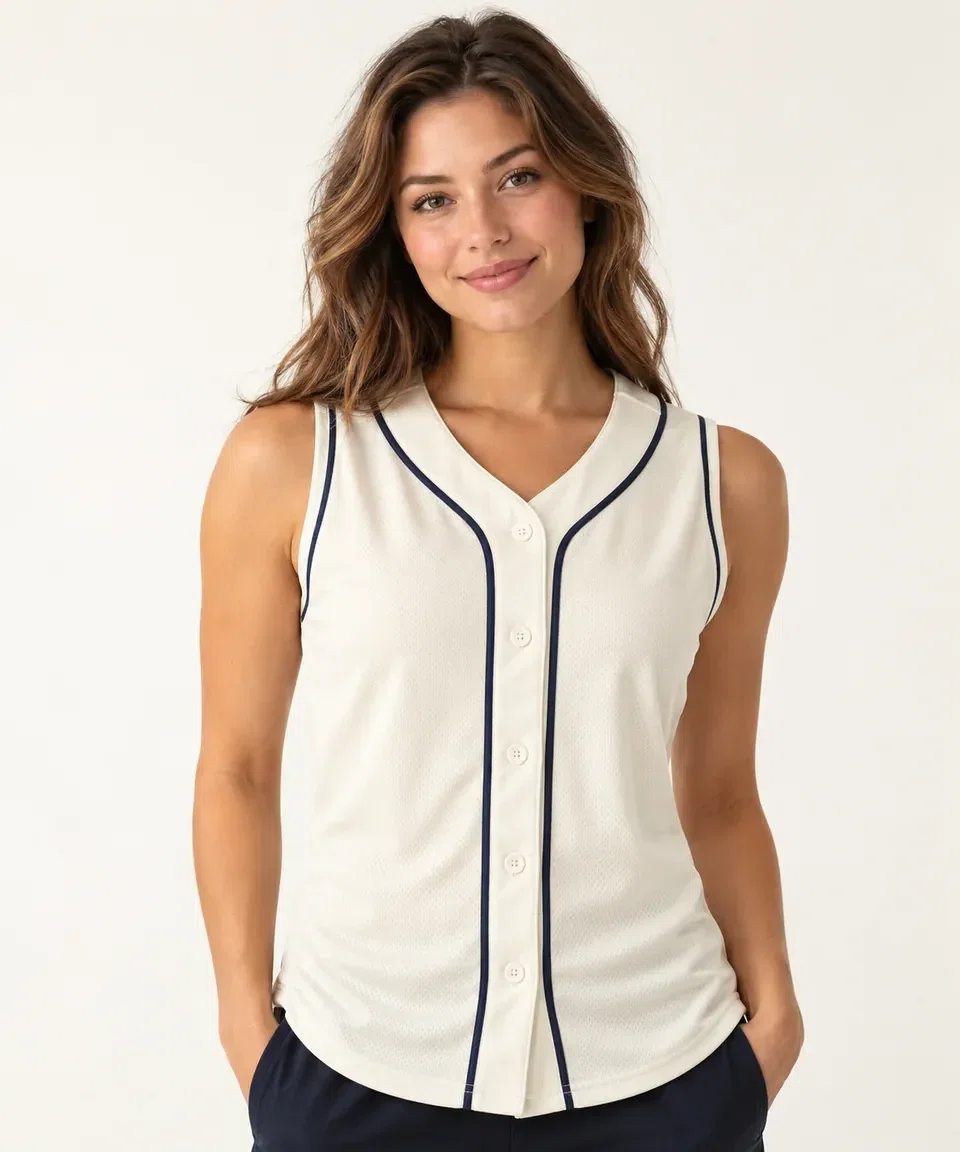
Compare complete order costs and reorders
There is no universal price winner in sublimation vs screen printing for baseball uniforms. A useful comparison includes the garment, all decoration, personalisation, samples and delivery.
Sublimation avoids preparing a separate screen for every artwork colour, which can make it attractive for complex designs. However, fabric coverage, panel preparation, garment construction and supplier pricing still affect the quote.
Screen printing can offer value for repeated, simple designs, especially when setup is spread across more pieces. It is not automatically the cheapest option for a small order. Extra colours and individual player details can change the comparison.
Ask suppliers to quote the same quantities, fabric requirements and roster. Request a separate price for a small follow-up order, such as replacement jerseys or late registrations.
For a hypothetical youth club, the best initial quote might become less attractive if a few late-player jerseys carry substantial setup or delivery charges. Compare that scenario before choosing.
Also ask how the supplier retains artwork, controls colour and manages material changes. A stored file supports consistency but does not guarantee a perfect match across future batches.
A sample-approval checklist for team buyers
- Confirm the garment: record composition, construction, fit and care instructions.
- Approve the design: review colours and placement on a physical sample, not only a screen.
- Check the roster: sign off names, numbers and sizes against one controlled list.
- Inspect assembly: assess graphics at seams, sleeves and the front opening.
- Assess wear and washing: agree the trial conditions and acceptance criteria.
- Confirm supply terms: record the approved quantity, estimated schedule and reorder arrangements.
A digital mockup helps with layout. It cannot demonstrate fabric feel, print performance or the fit of the completed jersey.
Prepare your baseball uniform quote brief
Shortlist sublimation for complex designs on compatible fabric. Compare screen printing for repeated placement graphics on suitable garments. Choose from the approved sample and full quote rather than the method name alone.
Explore custom baseball uniforms when planning your garment styles, colours and player details.
To discuss your order with StitchBase Uniform, request a baseball uniform quote with quantities, artwork, player details and required delivery date. Include home-and-away sets and likely reorders where relevant.
StitchBase Uniform provides free mockups before production. Minimum order and estimated turnaround are confirmed with the quote. Confirm the proposed fabric, decoration method and any physical sample arrangements before approving production.
Frequently Asked Questions
Common questions related to this article.