

Custom work uniforms can give staff a consistent, recognisable appearance, but adding a logo is only one part of the decision. The garments also need to suit the job, fit the people wearing them and follow your organisation's care requirements.
Start with a uniform brief before choosing styles or requesting prices. A clear brief helps you compare suppliers on the same basis and reduces uncertainty about artwork, sizes and approvals. This guide explains how to plan branded staff clothing from the first requirements list to repeat orders.
Define what your uniform programme needs to achieve
Decide what the clothing should help staff and customers do. A retail team may need to be easy to identify. An office team may need a coordinated appearance for meetings. A service business may need practical clothing that remains presentable between customer visits.
These goals influence the garments, colours and logo placements you choose. However, uniforms alone do not guarantee greater customer trust, higher employee morale or increased sales. Treat them as one part of your business presentation.
Write down a few priorities and rank them. For example, fit and movement may come first, followed by brand appearance, laundry compatibility and budget. Include staff feedback early so the brief reflects daily work rather than appearance alone.
Choose garments around the role
One style does not need to cover every employee. Different garments can share a coordinated colour palette and logo treatment while meeting different working needs.
| Garment option | What to assess | Useful sample check |
|---|---|---|
| Polo shirt | Fit, collar appearance, movement and logo position. | Check reach and comfort during representative tasks. |
| Button-down shirt | Chest and shoulder fit, sleeve length and care needs. | Check sitting, bending and button closure. |
| Layering garment | Comfort over the base uniform and seasonal use. | Try the complete outfit together. |
| Work trousers | Movement, pockets, waistband fit and wear points. | Check crouching, walking and access to required tools. |
When comparing custom polo shirts and button-down styles, assess their actual specifications rather than choosing solely from photographs. Ask which fabrics and fits can meet your brief.
If a role requires protective clothing, include the applicable requirements from the start. Ordinary branded apparel should not be treated as protective equipment without the necessary evidence.
Specify fabric and laundry requirements
Ask for the proposed fibre composition, fabric weight, construction and care instructions. Terms such as “premium”, “breathable” and “durable” are too broad to compare unless the supplier explains what they mean for the proposed garment.
Describe whether staff wash uniforms at home or use an organisation-managed laundry. Include required wash conditions where known. The fabric, trims and logo decoration all need to be suitable for that process.
Shrinkage is not determined by fibre content alone. CottonWorks identifies yarn, construction, processing, finishing and care among the factors affecting garment dimensional stability.
For a substantial order, agree how samples will be assessed after laundering. Check changes in fit, collar shape, colour, seams and decoration. Record what is acceptable before production rather than relying on an undefined promise of long-lasting quality.
Illustrative product styling
Plan a polo shirt for your team
Compare the garment details, logo position and quantities you need before requesting a quote.
Explore custom polo shirts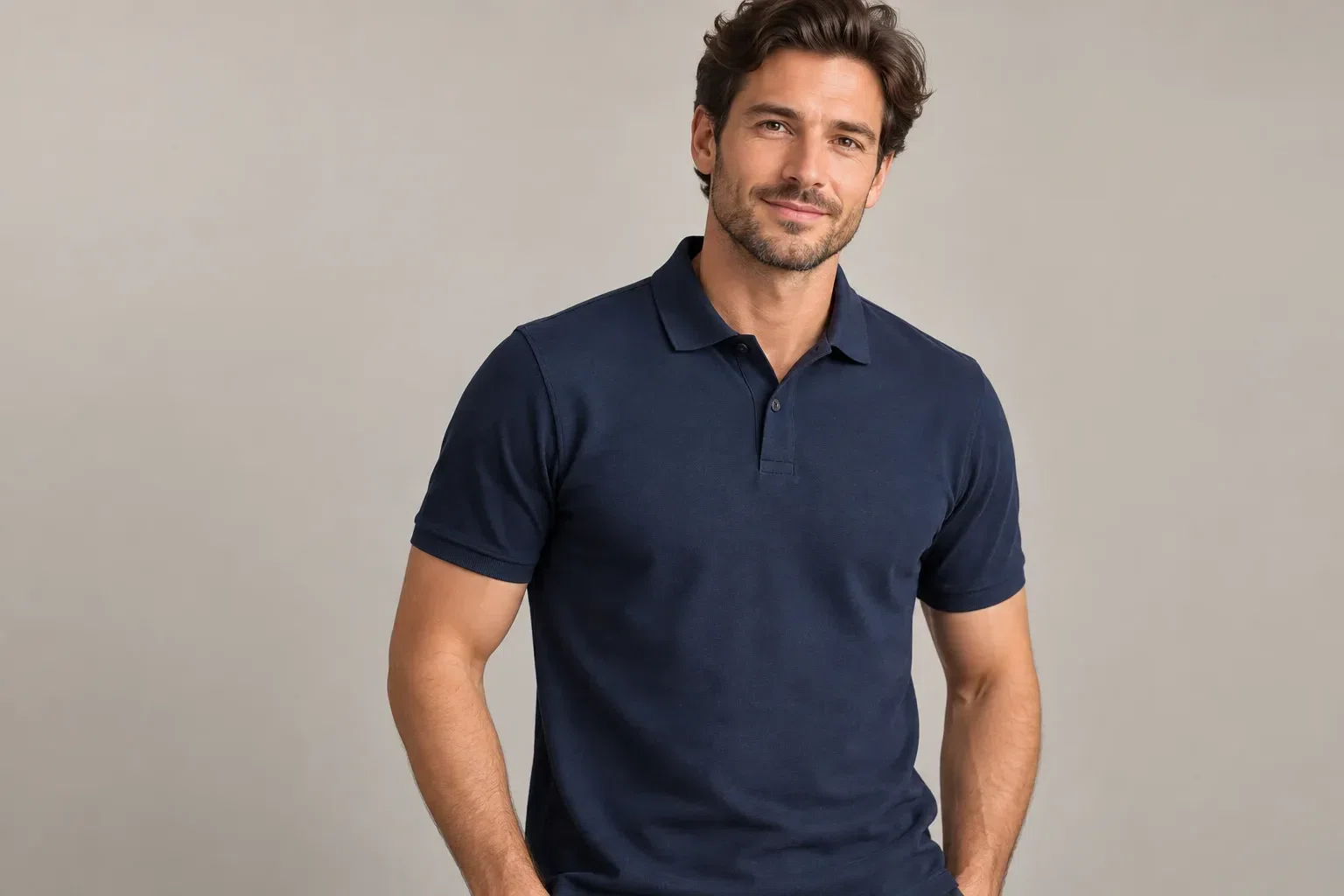
Plan logo artwork, colours and placement
Custom logo work uniforms should use an approved version of your branding. Provide the original artwork where available, along with colour references and any rules about spacing or minimum size.
A logo designed for a website may need adjustment for a small garment placement. Fine lettering, narrow gaps and subtle colour differences can be difficult to reproduce clearly. Have the brand owner approve any simplified version.
Choose placement for visibility and comfort. A left-chest mark may work for one garment, while another needs a sleeve or back position. Check that pockets, seams, layers and the wearer's normal movements do not obscure important details.
Review the layout across the proposed size range. A placement that looks balanced on one size may need a different approach on a smaller garment. Record the final dimensions and location in the approved specification.
Compare embroidery and printing for the actual design
Embroidery creates a textured mark using stitched thread. Printing offers several approaches for applying artwork to fabric. The appropriate method depends on the material, logo detail, coverage and intended care.
For embroidery, assess lettering clarity and fabric distortion. Madeira's guidance on preventing puckering identifies stitch density, tension, needles and backing among the factors that influence the result.
For printing, ask the supplier to identify the proposed process and explain why it suits the garment. “Printed logo” alone does not tell you how the finished decoration will feel or perform.
Do not assume embroidered logos never fade or that every print cracks quickly. Request a representative sample and suitable care guidance. If individual names are needed, ask how personalisation changes production, pricing and replacements.
Collect sizes before finalising quantities
A size label is not enough to establish fit. Obtain the size chart for the proposed garment and clarify whether its measurements describe the body or the finished clothing.
Where possible, arrange a fitting check with representative staff. Assess reach, bending, sitting and comfort with any normal layers. Ask about required fit options without assuming every size or cut is available.
Build a size-by-garment order list before approving the purchase. Keep personalisation details linked to the correct item if names or role identifiers are included.
Decide how many pieces each employee needs based on shifts and laundry arrangements. Include agreed spare requirements and expected new starters. Avoid assuming the same allocation suits every role.
Compare quotations for small teams and larger rollouts
Illustrative product styling
Review a button-down uniform option
Check the fit, care requirements and artwork placement against your staff uniform brief.
Explore button-down shirts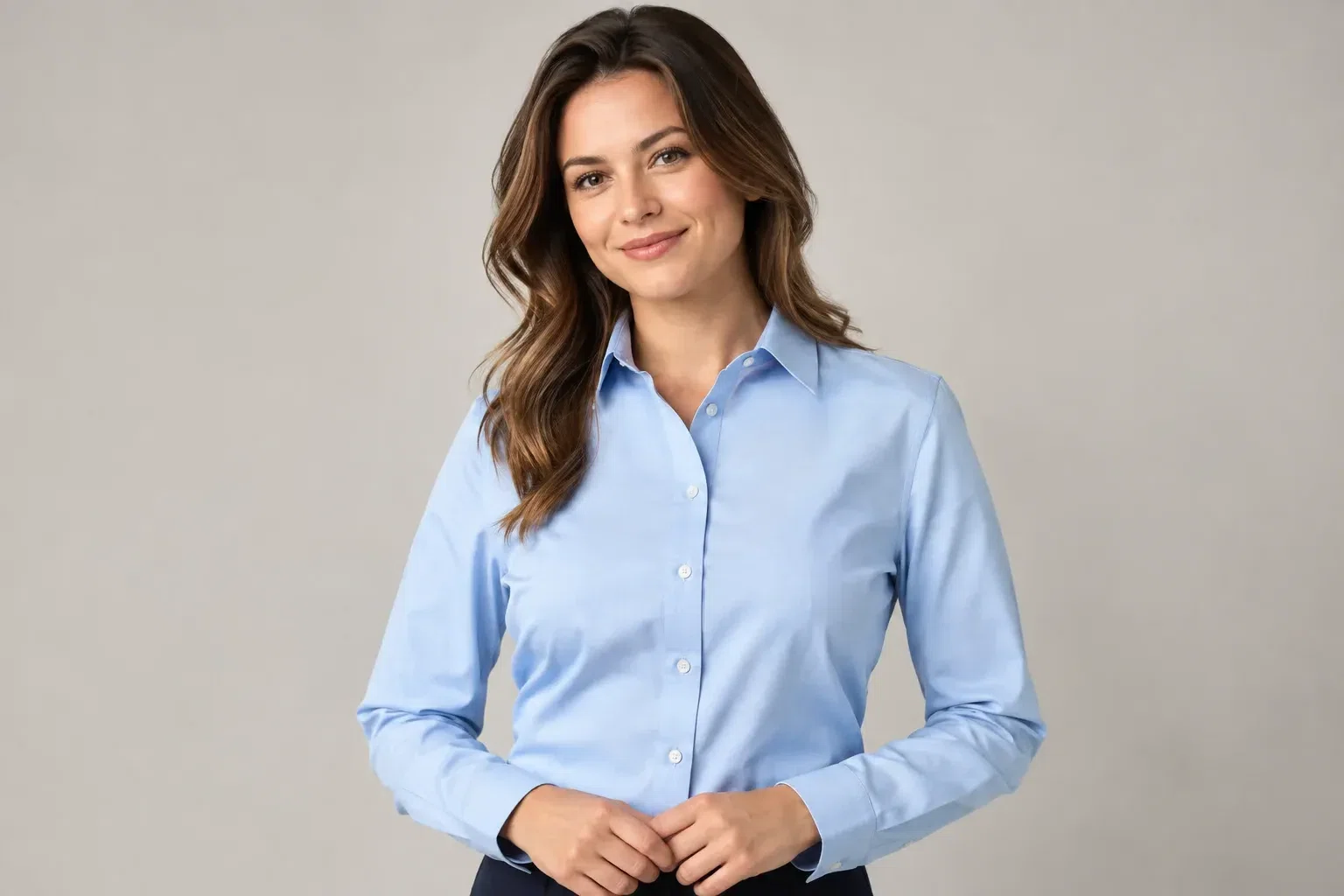
Affordable custom work uniforms are those that meet your requirements at an acceptable total cost. The lowest initial price may exclude decoration, samples or delivery, so ask suppliers to separate those items.
- Garment price and quoted quantity.
- Logo decoration and any artwork preparation fees.
- Individual names or other personalisation.
- Physical samples and approval arrangements.
- Packing, delivery and applicable taxes.
- Repeat-order charges and minimum quantities.
For a hypothetical small service company, a coordinated polo and one layering garment could be the starting brief. The company could trial that combination before adding more pieces. This is a planning example, not evidence of a guaranteed saving.
If you are searching for custom work uniforms near you, check the provider's actual service location, fitting arrangements and delivery coverage. An online enquiry does not establish local availability.
Confirm the estimated schedule against your required date. Include time for artwork approval, fitting, sample review and corrections. Do not assume a quoted production period includes every stage.
Approve samples and plan repeat orders
For a corporate uniform programme, keep a short approval record covering garment details, colours, logo dimensions, placements and care instructions. Record who can approve changes.
A digital mockup helps assess layout, but it cannot establish fabric feel, fit or wash performance. Clarify any physical sample arrangements separately.
Before authorising production, check the sample against the brief, approve the final size list and confirm the written quote. Keep a reference sample where practical.
Ask how later orders will be handled if the fabric, colour or garment construction changes. Retained artwork helps, but consistent reorders also require material and production controls.
Prepare a clear uniform enquiry
The useful starting point is a defined brief: who will wear the garments, what they do, how the clothing is cleaned and how the brand should appear. Build the order around those requirements.
To discuss custom work uniforms with StitchBase Uniform, request a staff uniform quote with your garment types, quantities, size requirements, logo files, preferred placements and required delivery date. Include laundry conditions and expected reorders where relevant.
StitchBase Uniform manufactures to the buyer's agreed requirements and provides free mockups before production. Each client has a dedicated production manager. Minimum order and estimated turnaround are confirmed with the quote.
Frequently Asked Questions
Common questions related to this article.