
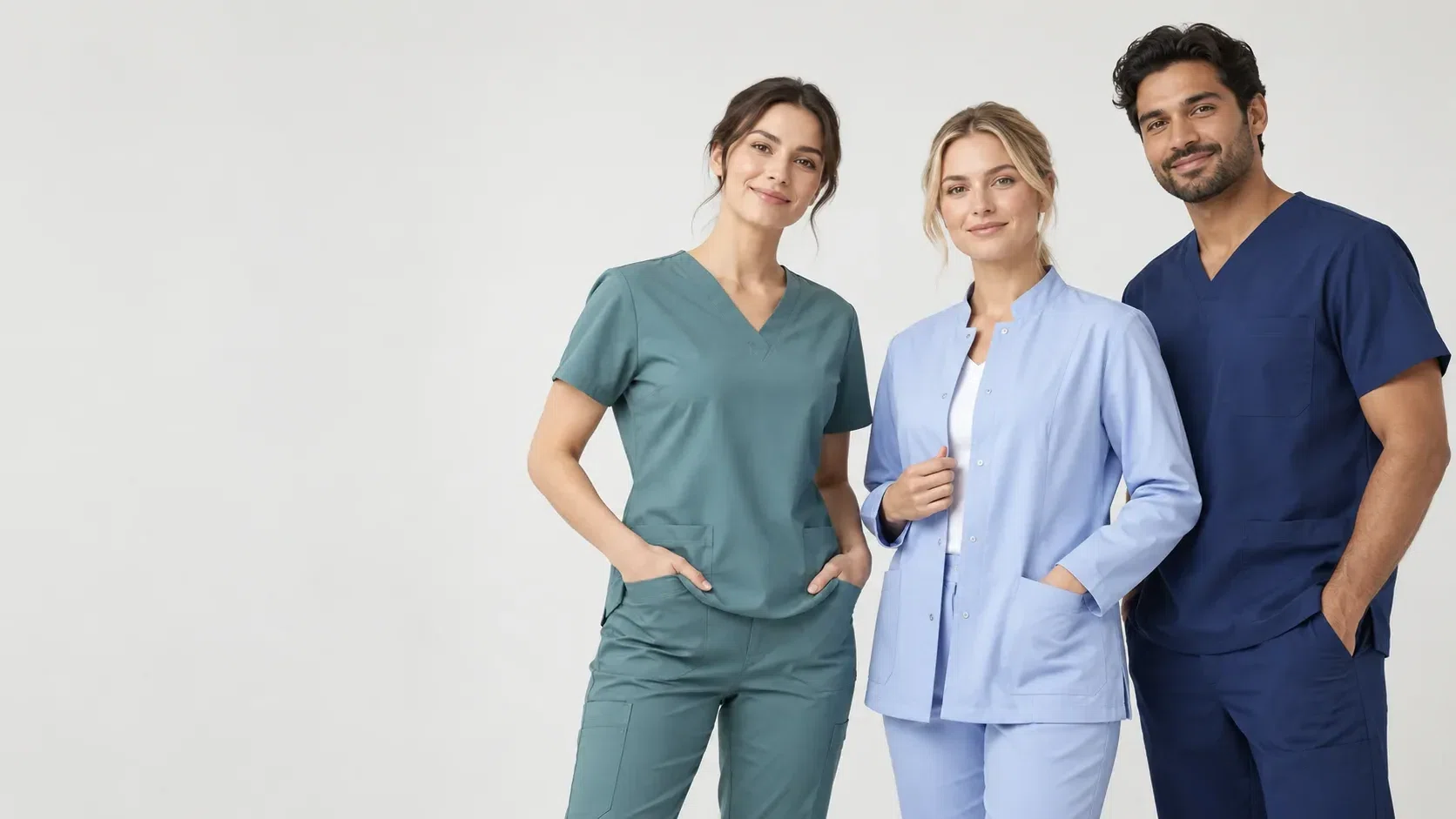
To customise a uniform for a healthcare team, start with a written specification. Define the role, garment, fit, laundry process and identification requirements before choosing colours or approving a logo.
Custom medical uniforms do not automatically provide better comfort, longer life or clinical protection. Those outcomes depend on the agreed design and supporting evidence. A clear brief gives procurement teams a practical way to compare proposals, assess samples and control changes.
Turn workplace needs into specific requirements
Begin with the people who will wear and manage the uniforms. Ask department leads and staff about movement, coverage, permitted pocket contents and normal working conditions. Include the laundry provider and relevant policy owners where their requirements affect the clothing.
Separate mandatory requirements from preferences. A required laundry process belongs in the mandatory column. A preferred shade or decorative detail may be flexible unless the facility's identification policy makes it essential.
Use plain descriptions that a supplier can assess. “Comfortable scrubs” is a goal. “Review the proposed scrub sample during sitting, bending and reaching” provides an approval step.
Define the garment for each role
A healthcare organisation may need several garment specifications rather than one uniform for every department. Scrubs, jackets and professional coats serve different purposes and should be assessed separately.
For custom medical scrubs, record top and trouser requirements individually. Staff may need different sizes for each piece. Include relevant coverage, fit and pocket needs without assuming every proposed feature is available.
For medical uniform jackets, describe what will be worn underneath and when the layer will be used. Check the complete outfit rather than reviewing the jacket in isolation.
Field-response clothing needs an operational assessment of its own. An EMS job title does not establish requirements for visibility, weather protection or reinforcement. Obtain the applicable specification from the organisation before discussing supply.
Military uniforms and another organisation's branded clothing should not be used as shortcuts for a healthcare specification. Define the actual role instead of copying a recognisable uniform or assuming similar features prove equivalent performance.
Keep ordinary uniforms separate from protective requirements
A customised uniform is not automatically PPE. A logo, reinforced pocket or fabric description does not demonstrate a barrier against infectious fluids, chemicals or other hazards.
The CDC's Standard Precautions guidance bases patient-care precautions on risk assessment and appropriate practices, including PPE when exposure is expected.
Where protective garments are needed, identify the required performance through the facility's approved process. Ask for evidence for the exact garment, intended use and applicable jurisdiction. Have the relevant specialist assess any proposed alteration or decoration.
Illustrative product styling
Review medical scrub requirements
Compare role, fit, laundry and identification needs for your team before approving a scrub order.
Explore medical scrubs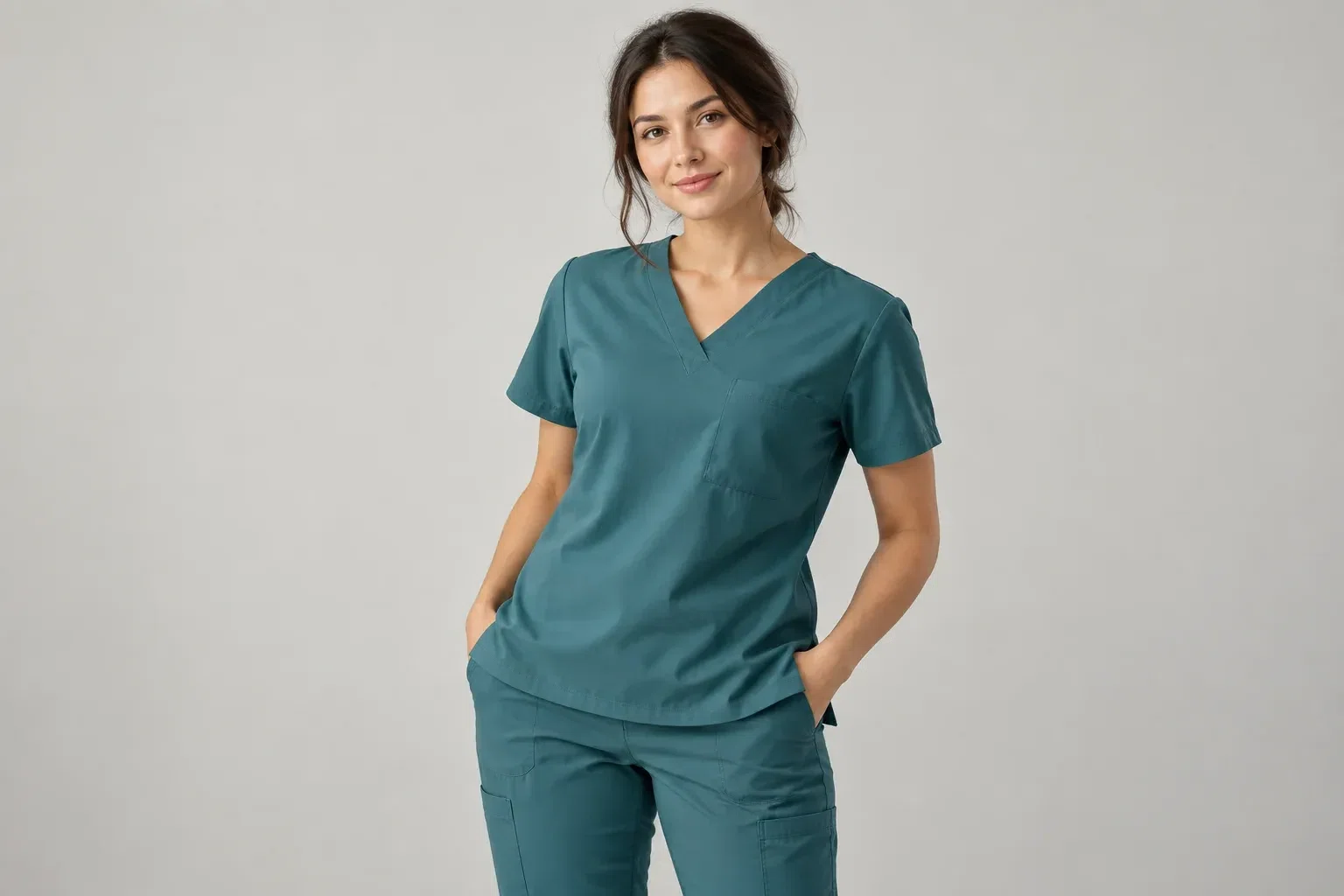
Do not substitute a supplier's general claim that clothing meets “medical standards” for a defined requirement. Record the applicable standard or assessment where one is required, together with the evidence needed for approval.
Write a specification that suppliers can answer
A useful specification explains the requirement, how it will be reviewed and who approves it. The following framework can be adapted to your organisation.
| Area | What to document | Approval approach |
|---|---|---|
| Garment | Type, intended role, cut, sleeves and closure. | Compare the proposed design with the role brief. |
| Fabric | Composition, construction, weight and any required performance. | Review the specification, sample and relevant evidence. |
| Fit | Measurements, required options and normal underlayers. | Use representative fitting checks. |
| Laundry | Approved washing, drying and handling requirements. | Confirm compatibility with the laundry provider. |
| Identification | Approved colours, logo, role text and placement. | Obtain policy and brand-owner approval. |
| Supply | Quantities, delivery requirements and expected reorders. | Review the written quote and estimated schedule. |
Ask suppliers to identify which requirements they can meet and where alternatives are proposed. Keep those differences visible when comparing quotes.
Agree fabric and laundry compatibility
Request the proposed fabric details and care instructions. Avoid choosing only from labels such as “premium,” “breathable” or “easy-care.” Ask what each claim means for the specific garment.
Describe the facility's actual laundry process. Include relevant wash and drying conditions and whether cleaning is organisation-managed or staff-managed.
The CDC's healthcare laundry guidance discusses facility arrangements for laundering uniforms or providing appropriate cleaning guidance. Follow the requirements applicable to the setting, including arrangements for contaminated items.
Assess the complete garment, including trims and decoration. Agree any sample laundering checks and record the process used. Changes in dimensions, seams, colour or logo appearance should be reviewed against agreed acceptance criteria.
A garment appearance check is different from confirming infection-control arrangements. Keep both responsibilities clear in the specification.
Plan fit and identification without assuming unlimited customisation
Request size charts for the proposed garments and clarify whether measurements refer to the body or finished clothing. Check garment lengths and normal movement as well as chest or waist size.
Ask about required fit options and assess samples on representative staff. Avoid promises of a perfect fit for everyone before those checks have taken place.
For branding, provide approved artwork, colour references, finished logo dimensions and placement. Confirm which decoration method is suitable and available for the proposed material.
Names, titles and department details should follow the facility's identification and privacy rules. Maintain one approved personalisation list, with spelling and garment allocation checked before production.
Illustrative product styling
Plan a medical jacket specification
Share your layering needs, garment requirements and approved artwork for a team proposal.
Explore medical jackets
A digital mockup supports layout approval. It cannot establish fabric feel, fit, wash performance or protective properties.
Compare complete proposals and manage approvals
Issue the same brief to each supplier. Ask quotations to separate garments, artwork preparation, decoration, personalisation, samples, delivery and applicable taxes.
Confirm minimum quantities and estimated timing rather than assuming individual orders or immediate supply are available. Include the time needed for your own sample and artwork approvals.
For a hypothetical outpatient clinic, reception and clinical teams might share approved branding while using different garments. The clinic would assess each design against its role requirements rather than applying one specification to both groups.
Assign an authorised owner to approve the final design, size breakdown and quote. If a sample requires changes, record the revised specification and confirm which version supersedes the earlier one.
Control changes and repeat orders
For a wider healthcare uniform programme, keep the approved specification, artwork, size records and reference samples together where practical.
Ask how the supplier will communicate changes in fabric, construction or colour. Require proposed substitutions to be reviewed against the brief before acceptance.
Plan for new starters, replacements and department changes. Ask about repeat-order quantities, personalisation charges and estimated schedules. Retained artwork supports consistency, but it does not guarantee identical material performance across future batches.
Prepare your healthcare uniform enquiry
A strong brief defines the role, required garment performance and approval process. It gives your team a consistent basis for evaluating proposals and discussing suitable customisation.
To discuss custom medical uniforms with StitchBase Uniform, request a healthcare uniform quote with garment types, quantities, fit requirements, laundry conditions, approved artwork and the required delivery date. Include mandatory standards and the evidence your organisation needs to review.
StitchBase Uniform manufactures to the buyer's agreed requirements and provides free mockups before production. Each client has a dedicated production manager. Minimum order and estimated turnaround are confirmed with the quote.
Frequently Asked Questions
Common questions related to this article.