
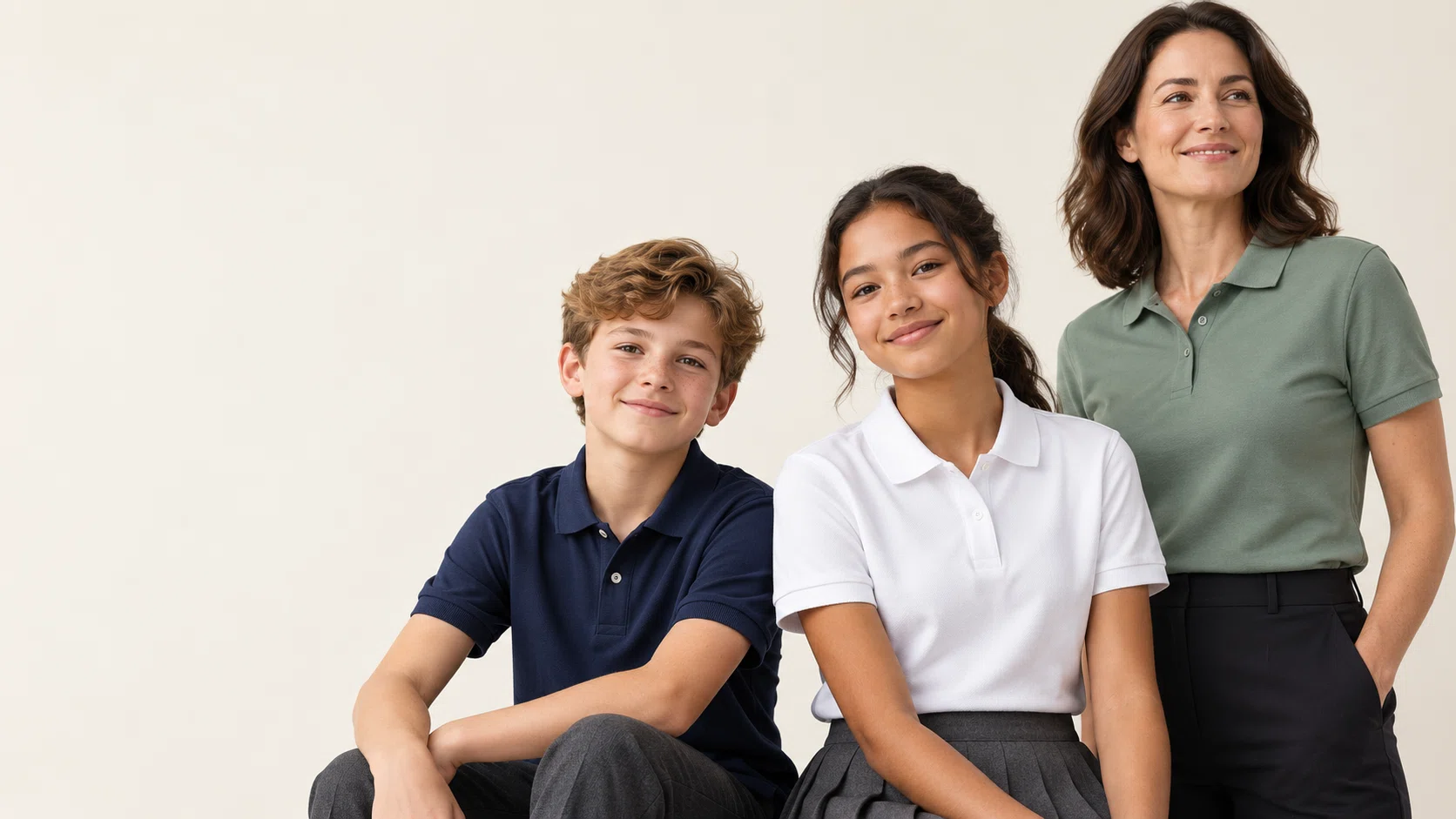
If students find their school polo shirts uncomfortable, start by identifying where and when the problem occurs. A tight collar, rough label, restrictive sleeve or bulky school crest calls for a different response from a shirt that feels too warm.
For school leaders, uniform coordinators and procurement teams, the solution is a better garment specification backed by wearer feedback. Assess fabric, fit, construction and decoration together, then approve a physical sample before placing a bulk order.
Why do school polo shirts feel uncomfortable?
“Uncomfortable” is useful feedback, but it is not yet a purchasing specification. Ask students to describe the sensation, the area affected and whether it appears during lessons, outdoor activity or after washing. Check whether complaints concern one size, one batch or several styles.
Use the findings to narrow down what needs changing. The following table gives starting points for inspection, not confirmed explanations for every complaint.
| Reported problem | What to inspect | What to trial |
|---|---|---|
| The neck feels tight | Collar opening, placket and neckline measurements | A revised neckline or different size |
| Reaching feels restricted | Shoulders, armholes, sleeves and chest ease | A cut that allows the required movement |
| The shirt scratches | Labels, seams, collar edges and crest backing | Alternative details on a decorated sample |
| The shirt feels too warm | Fabric, coverage, layering and wearing conditions | Alternative fabrics under comparable conditions |
| The fit changes after washing | Care routine and before-and-after measurements | A wash trial using the proposed instructions |
Keep a short feedback record so supplier discussions focus on observable issues rather than vague requests for a “better quality” polo shirt.
Choose polo shirt fabric for the school day
Ask for fabric composition, knit construction, weight, finish and care instructions. Cotton, polyester and blends are useful options to assess, but a fibre name alone does not establish how a finished garment will feel.
Review uniform material options alongside the school's climate, layering rules and daily activities. If students wear a jumper over their polo, include that combination in the trial rather than assessing the shirt in isolation.
Cotton, polyester or a blend?
Compare proposed cotton fabrics and polyester fabrics on actual samples. Record softness, surface texture, fit and comfort after wear and laundering. For blends, request the fibre percentages and confirm the complete specification.
Separate moisture absorption, moisture transport and drying performance when asking questions. CottonWorks describes moisture-management finishes in its TransDRY guidance, illustrating why fibre content is only part of the discussion. This does not mean that any proposed StitchBase fabric has that finish.
If comparing piqué, jersey or interlock samples, assess the actual texture and behaviour of each. Avoid assuming that one knit type or a particular fabric weight will suit every student and season.
Improve fit without simply choosing a larger size
Illustrative product styling
Review school polo shirt fit
Compare collar, sleeve, shoulder and body measurements on a decorated sample before approving your school uniform specification.
Explore school polo shirts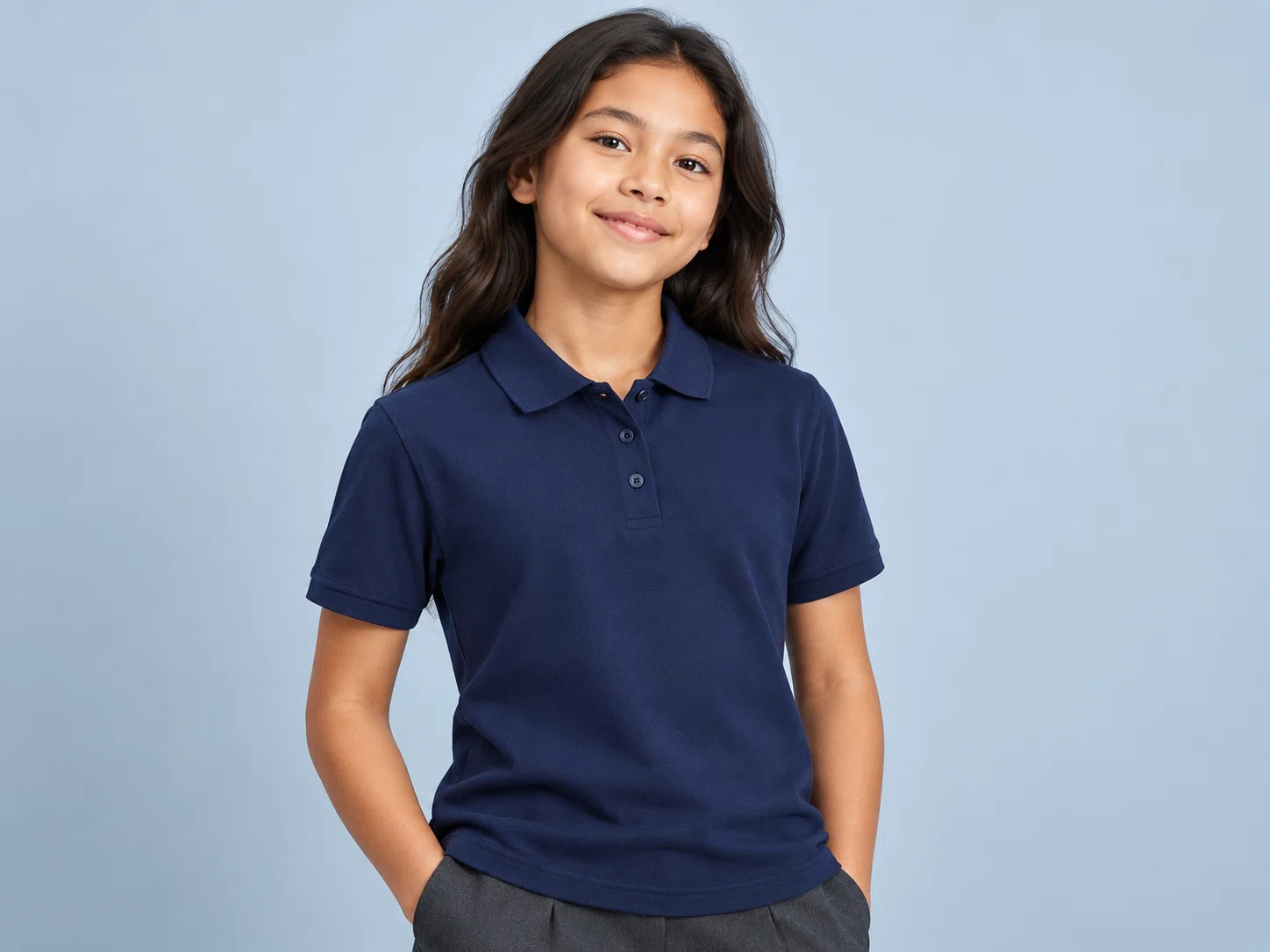
A larger size may ease one tight area while making another part of the shirt too loose or long. Review the cut as well as the size: shoulder width, chest allowance, armhole shape, sleeve opening and body length all belong in the fitting discussion.
Use the supplier's chart for the exact garment. Establish whether it shows body measurements or finished shirt measurements, then follow the measuring method consistently. Age labels can help organise sizes, but they should not replace checking the relevant measurements.
During a supervised fitting, ask students to sit, reach forward and raise their arms. Check the collar, sleeve openings and hem position during movement. Include any required tucking or layering in the assessment.
Plan a useful size range for the students being fitted. Keep pupil sizing and staff sizing as separate records, even when the school wants a consistent colour and crest.
Check collars, seams, labels and school crest decoration
A polo shirt can fit correctly and still have an uncomfortable detail. Inspect the inside as carefully as the outside, paying attention to the neckline, underarms, side seams, button area and reverse of the school crest.
- Collar and cuffs: check pressure and the feel of edges against the skin.
- Seams: inspect bulk, roughness and loose thread ends.
- Labels: discuss position and alternatives while retaining required garment information.
- Decoration: check backing, stiffness and placement on the finished shirt.
Approve the school crest on the proposed fabric at its final size. Madeira's embroidery guidance identifies stitch density, tension and backing among the factors affecting fabric distortion. A logo mockup alone cannot show the physical result.
Where a student has specific sensory preferences, record the details that matter to them and trial the proposed alternative. Do not assume a single fabric or label arrangement will resolve every concern.
Run a wear and wash trial before ordering in bulk
Test decorated samples with a small group representing the size range and different comfort concerns. Follow the school's normal arrangements for participation and feedback. Explain which details are being assessed so comments are comparable.
Record comfort during ordinary school activities, including whether the shirt pulls, rubs or needs repeated adjustment. Assess the same features after laundering according to the proposed care instructions.
Measure the same points before and after washing. CottonWorks' shrinkage guidance explains that dimensional changes depend on construction, processing, finishing and garment care, among other factors. Avoid assuming that every cotton shirt will shrink identically or every blend will retain its size.
Agree what changes are acceptable with the supplier and retain the results. A short trial can identify problems; it cannot prove that a garment will remain unchanged throughout its service life.
Buying polo shirts for schools: build a clear bulk-order brief
Illustrative product styling
Plan your school polo order
Share your size range, quantities, crest artwork and comfort requirements for a buyer-focused uniform quotation.
Request a school polo quote
Once the trial resolves the main issues, turn the approved choices into a written specification. This helps suppliers quote against the same requirements and gives the school a reference for checking deliveries.
- Garment style, fabric composition, construction and agreed colour.
- Size chart, measurements and quantities by size.
- Collar, cuff, seam and label requirements.
- Crest artwork, decoration method, dimensions and placement.
- Sample reference, care instructions and agreed acceptance checks.
- Delivery location, required arrival date and reorder requirements.
Compare complete quotations, including garment costs, decoration, samples, delivery and any applicable taxes. Ask how substitutions or changes will be handled, and confirm minimum quantities and estimated turnaround in writing.
For future orders, retain the approved sample reference and specifications. Recheck sizing as students grow, and confirm that any replacement fabric or garment style is acceptable before approving it.
Questions school buyers often ask
What is the best polo shirt for a school uniform?
The best choice is the garment that meets the school's policy and performs acceptably in its fit, wear and wash checks. Compare complete decorated samples instead of selecting only by fibre type or an advertised comfort claim.
Can we order school uniform polo shirts online?
An online enquiry can start the process, but confirm the specification, size breakdown, sample arrangements and quotation before production. Review custom polo shirt options and provide enough detail for the supplier to assess the order.
Can older students or staff use men's polo shirts?
Men's polo shirts may be worth considering where adult sizing is appropriate, but check the exact measurements and cut. Adult and pupil size labels are not interchangeable. Trial the garment rather than assuming it will fit because of its category name.
Start with student feedback, then approve the right polo
Comfortable school uniforms begin with specific feedback and a sample that reflects the final order. Improve the relevant fabric, fit or construction detail, then document the result so future purchases follow the same requirements.
StitchBase Uniform manufactures to buyer-agreed requirements and provides free mockups before production. Minimum order quantities and estimated turnaround are confirmed in the quotation. Discuss physical samples separately when evaluating comfort.
To plan your school's next order, request a school polo shirt quotation with your pupil size range, estimated quantities, crest artwork and the comfort issues you want to address.
Frequently Asked Questions
Common questions related to this article.