

The best fabric for work uniforms depends on what employees do, where they work and how their clothing is washed. Cotton can suit teams that value an absorbent, natural-fibre fabric. Polyester is often worth considering for easy-care uniforms and quick-drying designs. Polyester-cotton blends offer another route when buyers need to balance several requirements.
However, fibre content alone cannot tell you which uniform will feel cooler, last longer or cost less to maintain. Fabric construction, weight, finishing and garment fit also matter. Use this guide to shortlist options and ask suppliers for evidence that matches your working conditions.
Polyester vs cotton vs blends: a quick comparison
| Consideration | Polyester | Cotton | Polyester-cotton blends |
|---|---|---|---|
| Moisture behaviour | Low fibre absorbency; wicking depends on the fabric design. | Absorbs moisture; ordinary cotton can remain damp longer. | Varies with composition, structure and finishing. |
| Everyday care | Often offers useful wrinkle resistance and drying performance. | May need more ironing; shrinkage depends on processing and care. | Can offer easy-care properties, but needs sample verification. |
| Comfort | Assess airflow, surface feel and fit. | Assess weight, weave and comfort when damp. | Assess the finished fabric rather than assuming a midpoint. |
| Durability | Check abrasion, snagging and seam performance. | Check construction, wear points and wash stability. | Check the same performance requirements as either pure fibre. |
| Protective use | Ordinary fabric is not evidence of protection. | Ordinary fabric is not evidence of protection. | Ordinary fabric is not evidence of protection. |
These are screening considerations, not a ranking of finished garments. Compare samples intended for the same role before making a purchasing decision.
Polyester uniforms: useful for easy care, with conditions
Polyester is a synthetic fibre used in many apparel fabrics. Buyers often consider it when wrinkle resistance, dimensional stability and shorter drying times are priorities. Those benefits still depend on the finished material and its care instructions.
It is important to separate low absorbency from moisture-wicking performance. A fibre can absorb little water without moving sweat effectively away from the skin. Yarn design, fabric structure and finishes influence that movement.
AATCC's liquid moisture management test summary identifies both fabric structure and fibre and yarn characteristics as relevant. If a supplier describes a uniform as moisture-wicking, ask what supports the claim for that fabric.
Polyester also does not automatically mean poor breathability. A lightweight, open construction can feel different from a dense fabric with the same composition. For active staff, assess ventilation and comfort during movement rather than rejecting or selecting polyester from the label alone.
When reviewing polyester fabric options, request the proposed weight, construction and care requirements. Check colour retention, pilling and snagging on representative samples rather than assuming that every polyester uniform performs alike.
Cotton uniforms: assess comfort alongside wash performance
Cotton is a plant-derived fibre valued for its absorbency and familiar feel. It can be a useful candidate for everyday shirts and other uniforms where employees prefer a natural-fibre fabric.
However, absorbency has a trade-off. Ordinary cotton takes up moisture and can feel heavy or damp during sustained perspiration. AATCC's discussion of cotton performance technologies explains both its slower drying and how specialised treatments can change moisture behaviour.
This means cotton is not automatically the coolest option for every hot workplace. Compare the actual garment's weight, openness and fit, then ask wearers how it feels during a typical shift.
Illustrative product styling
Compare custom button-down shirts
Assess fabric weight, construction and care on the proposed garment, then confirm the material specification for your order.
View button-down shirts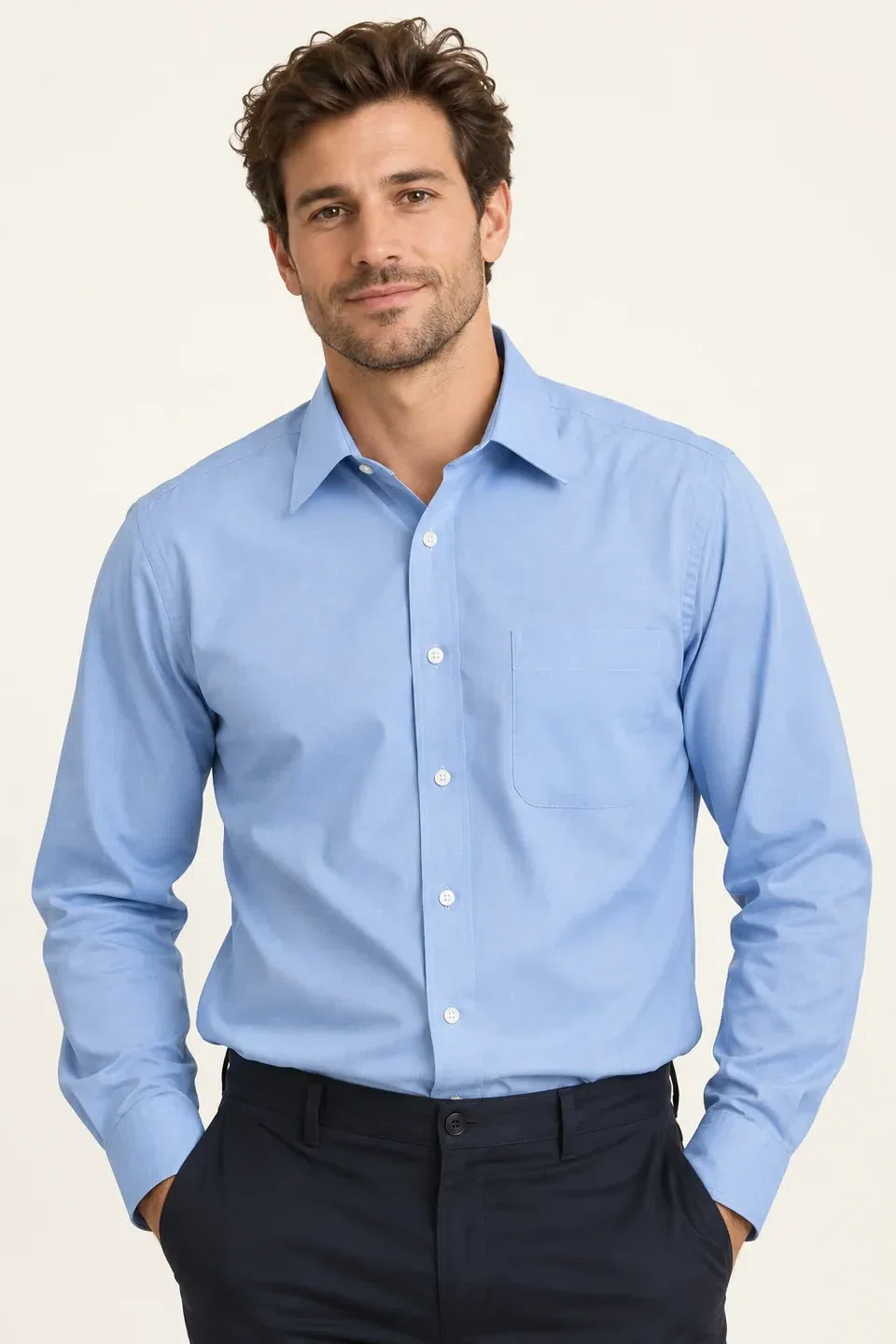
Shrinkage also needs a more specific question than “Will cotton shrink?” CottonWorks identifies fibre, yarn, construction, processing, finishing and garment care among the factors affecting shrinkage and dimensional stability.
For cotton fabric options, ask whether the proposed material has been stabilised and what dimensional-change results are available under the intended wash process. Do not assume all cotton is fragile or that a heavier fabric will automatically last longer.
Polyester-cotton blends: a shortlist option, not a guarantee
Blended fabrics contain more than one fibre. Polyester-cotton blends combine these two fibres in specified proportions, but the ratio is only part of the specification.
A label such as “65/35” is incomplete unless the fibre order is clear. Write the composition as “65% polyester, 35% cotton” or the appropriate alternative. This avoids comparing two fabrics with reversed proportions.
Blends may help meet several requirements, such as surface feel, wrinkle resistance and wash stability. Nevertheless, two fabrics with the same composition can perform differently because their yarns, weight, construction and finishes differ.
Likewise, a tri-blend describes three fibres, not a universal performance category. Some combine polyester, cotton and rayon; others use different components. Check the full composition and care instructions before treating one as suitable for a uniform programme.
Shortlist a blend when it appears to meet your brief. Then compare it with cotton or polyester samples under the same conditions. Avoid buying on a promise of “the best of both” without checking the finished garment.
Choose by working conditions, not industry name alone
People in the same organisation can need different fabrics. Reception staff, delivery teams and maintenance workers may share a brand identity while wearing uniforms suited to different tasks.
- Office and front-of-house roles: compare appearance, fit, skin contact and creasing during normal use.
- Active or outdoor roles: assess sweat handling, airflow, drying and compatibility with required protective equipment.
- Healthcare and hospitality: start with the organisation's cleaning requirements, then compare comfort and appearance after laundering.
- Warehouse and general service roles: assess movement, abrasion points, snagging and replacement patterns.
For front-of-house roles, compare the fabric on the actual garment style as well as the swatch. A custom button-down shirt and a knit top can feel and drape differently, even when their fibre labels look similar.
A custom polo shirt is another garment style to assess for teams that prefer a collared knit top. Confirm the composition and construction for the specific order rather than assuming a standard fabric.
For a corporate uniform programme, write separate requirements for each role where necessary. One fabric across every garment can simplify ordering, but it should still meet each group's needs.
For flame, heat or electrical hazards, use a protective-clothing assessment. Ordinary polyester can melt, while ordinary cotton can ignite. Neither a natural-fibre label nor a blend ratio proves that clothing provides the required protection.
Illustrative product styling
Explore custom polo shirts
Compare the finished knit fabric and garment fit with your team before approving the uniform specification.
View polo shirts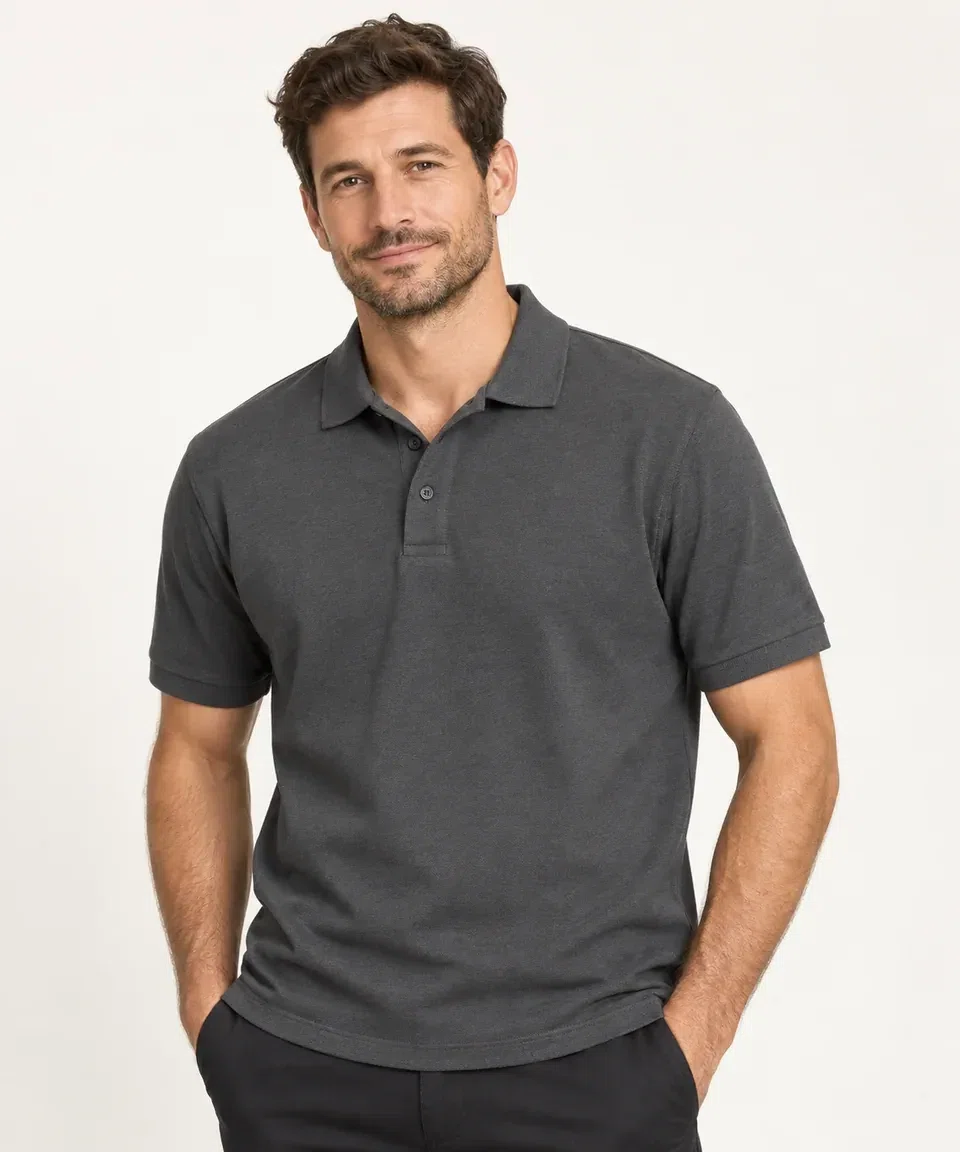
For example, the US OSHA standard for electric power generation, transmission and distribution addresses clothing that could melt or ignite under flame or electric-arc exposure. Its requirements apply within that defined scope; other roles and jurisdictions need their own assessment.
Compare laundry costs and useful garment life
A lower purchase price does not establish better value. Compare the quoted garment cost with the cleaning process, finishing effort and expected replacement needs.
Ask your laundry provider whether shortlisted garments can follow the required wash and drying process. Check the complete garment, including trims and logo decoration. A suitable fabric alone does not guarantee that every component tolerates the same treatment.
For a hypothetical service business, a cotton shirt that staff prefer may be worth additional ironing effort. Another team may prioritise a blend that keeps an acceptable appearance with less finishing. These are purchasing trade-offs, not guaranteed savings.
Environmental claims also need evidence. “Cotton” does not automatically mean environmentally preferable, and “recycled polyester” does not establish the whole garment's impact. Textile Exchange's cotton life-cycle assessment guidance cautions against simplistic rankings and highlights variation by production system and region.
A fabric approval checklist for buyers
- Document the role: include movement, climate, skin contact, laundry and any protective requirements.
- Request the specification: record fibre percentages, weight, construction, finishes and care instructions.
- Compare actual garments: assess fit, opacity, movement and surface feel in the proposed design.
- Run a wearer trial: collect feedback from employees doing representative tasks.
- Assess laundering: check dimensions, colour, seams, pilling and decoration after the agreed process.
- Record approval: retain a sample and specification, including how material changes on reorders will be handled.
Agree measurable acceptance criteria where performance matters. Keep wearer feedback separate from laboratory results: both are useful, but they answer different questions.
Prepare your next uniform enquiry
Choose the fabric that meets the role, passes the agreed checks and fits your overall budget. Polyester, cotton and blends can each be appropriate; none is the automatic winner for every business.
To discuss your requirements with StitchBase Uniform, request a work uniform quote with garment types, quantities, preferred fabric characteristics, laundry conditions and required delivery date. Mention any mandatory standards at the start.
StitchBase Uniform manufactures to the buyer's agreed requirements. Minimum order and estimated turnaround are confirmed with the quote. Ask about material suitability and sample approval before committing to production.
Frequently Asked Questions
Common questions related to this article.